Main Courses
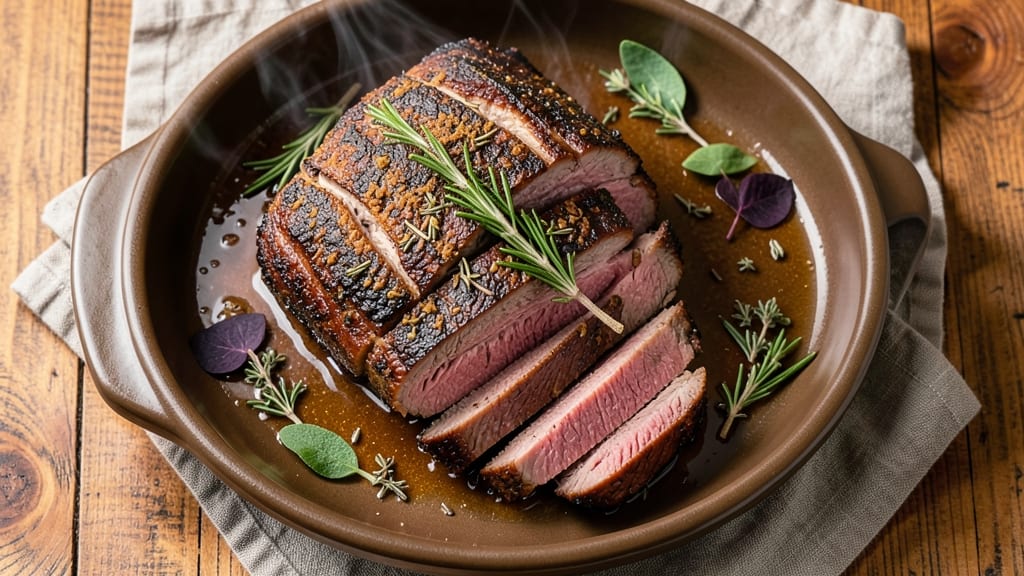
Rachael Ray’s standing rib roast recipe is the ultimate holiday centerpiece—juicy, flavorful, and effortless enough to handle even when stress levels peak. The secret lies in her signature high-heat sear and herb crust, which locks in moisture while creating a caramelized exterior that commands attention.
I’ve perfected this method over years of holiday hosting, and it never fails to impress without requiring hours in the kitchen.
This recipe delivers restaurant-quality results with minimal fuss: a simple seasoning blend, precise roasting times, and a foolproof resting technique ensure tender, perfectly cooked meat every time.
The standing rib roast method—cooking the roast upright—creates a crispy crust while keeping the interior moist, and the pan sauce elevates it from good to unforgettable. It’s the kind of dish that makes you look like a master chef, even if you’re just starting out.
By the time you carve into this roast, you’ll have a golden-brown, herb-infused masterpiece with a rich, flavorful crust and melt-in-your-mouth tenderness. Pair it with roasted garlic mashed potatoes and crisp green beans for a complete, crowd-pleasing meal that feels like a five-star restaurant experience.
The best part? It’s designed to shine even when you’re multitasking—because holiday dinners should be joyful, not stressful.
Whether you’re hosting a large gathering or simply treating your family to a special meal, this recipe delivers effortless elegance with every bite. The technique is straightforward, the results are impressive, and the leftovers (if there are any) reheat beautifully.
Let’s get started on a holiday roast that will have everyone asking for seconds—and bragging about your cooking skills.
Ingredients for rachael ray standing rib roast
Eight ingredients transform into a showstopping holiday main—juicy, flavorful, and effortless enough for even the busiest hosts.
| Ingredient | Amount | Notes |
|---|---|---|
| Standing Rib Roast 🥩 | 6 lb | Bone-in, center-cut preferred |
| Extra-Virgin Olive Oil 🫒 | ½ cup | High-quality, fruity variety |
| Diamond Crystal Kosher Salt 🧂 | 2 tbsp | Coarse grain preferred |
| Fresh Rosemary 🌿 | ¼ cup | Finely chopped, fresh stems |
| Fresh Thyme 🌿 | ¼ cup | Leaves only, stems removed |
| Fresh Sage 🌿 | ¼ cup | Leaves finely chopped |
| Garlic Cloves 🧄 | 8 cloves | Peeled, smashed slightly |
| Black Peppercorns 🌶️ | 1 tbsp | Freshly cracked preferred |
| Unsalted Butter 🧈 | ½ cup | Cold, cubed for basting |
| Yellow Onion 🧅 | 1 whole | Sliced, for pan sauce |
| Red Wine 🍷 | 1 cup | Dry, bold variety |
| Beef Broth 💧 | 1 cup | Low-sodium preferred |
| Fresh Parsley 🌿 | ¼ cup | Chopped, for garnish |
The standing rib roast is your star—bone-in and center-cut for maximum flavor. Costco or Whole Foods carry excellent options, but any reputable butcher will have it. Look for vibrant color and good marbling (those white fat streaks). If you're buying a whole roast, ask your butcher to trim it to about 6 pounds—this size cooks beautifully for a crowd. The herbs? Fresh is non-negotiable—dried just won't cut it here. I grab mine from the farmers market, but the grocery store's herb section works too. Just make sure the leaves are bright and fragrant, not wilted or yellowing.
No red wine? Dry sherry or beef broth works in a pinch—just add a splash of balsamic for depth. Short on fresh herbs? Dried thyme and rosemary at half the amount will get you close, though the flavor won't be as vibrant. The garlic can be roasted ahead (wrap whole cloves in foil, roast at 400°F for 20 minutes) for a sweeter taste. For the pan sauce, Trader Joe's has great affordable red wine, and their beef broth is low-sodium and flavorful. The butter matters here—use unsalted so you control the seasoning, and keep it cold when basting for maximum crispiness on that crust.
This roast reheats beautifully—slice it thin and warm in the oven for the best results. Leftovers keep for 4-5 days in the fridge, but honestly, they won't last that long. For make-ahead convenience, prep the roast and seasoning blend a day ahead—store everything but the roast in the fridge until ready to cook. The pan sauce can be made in advance too—just reheat gently before serving. Portion the leftovers into containers so you're not scrambling later. Trust me, your future self will thank you.
Why You'll Love This Recipe
- Foolproof Seasoning: I swear by the salt-rosemary-thyme crust—just rub it on, let it sit, and the oven does the rest. No fancy marinades or last-minute prep.
- Weeknight Crowd-Pleaser: This roast feeds six but costs less than takeout for two. My in-laws always ask for the recipe after dinner.
- Leftovers That Shine: The second day? Even better. Thinly sliced over toast with a fried egg—suddenly, it’s breakfast. (Yes, I’ve done it.)
- One-Pan Magic: Standing rib roast stays juicy while the crust gets crispy—no basting, no flipping. Just set it and forget it until the timer goes off.
Step-by-step instructions for rachael Ray's standing rib roast
Here's how to create a showstopping holiday roast with minimal stress and maximum flavor.
Prep and Season the Roast for Maximum Flavor
Remove the standing rib roast from the refrigerator and let it sit at room temperature for 30 minutes while you prepare the seasoning. Pat the roast dry with paper towels—this step is crucial for achieving crispy, golden-brown skin. In a small bowl, combine the 0.25 cup fresh rosemary, 0.25 cup fresh thyme, 0.25 cup fresh sage, and 1 tablespoon black peppercorns. Pulse in a food processor or finely chop by hand until you have a coarse herb mixture.
In a separate bowl, mix the 0.5 cup extra-virgin olive oil with 2 tablespoons diamond crystal kosher salt until the salt dissolves completely. This creates a flavorful oil that will penetrate the meat beautifully. Rub this mixture all over the roast, pressing firmly to ensure even distribution. Then sprinkle the herb mixture evenly over the entire surface, making sure to get into any crevices. Let the seasoned roast rest for another 15 minutes before roasting—this allows the flavors to meld and the seasoning to adhere properly.
Sear the Roast for Deep Flavor and Color
Preheat your oven to 425°F. Place a heavy oven-safe skillet or Dutch oven over medium-high heat on the stovetop. Add 0.25 cup unsalted butter (half of the total amount) and let it melt and foam for about 1 minute. Place the seasoned roast in the skillet, fat-side down, and sear for 5-6 minutes until a deep golden-brown crust forms. Flip the roast and sear the other side for another 5-6 minutes. This high-heat searing locks in juices and creates a flavorful crust that's essential for holiday perfection.
Transfer the skillet with the roast to the preheated oven. Roast for 20 minutes to begin cooking the meat evenly. This initial high-heat phase ensures the outer layers develop flavor while the interior begins to cook through. After 20 minutes, reduce the oven temperature to 325°F—this lower temperature will allow the roast to cook through gently without over-browning the exterior.
Build the Pan Sauce While the Roast Cooks
While the roast is in the oven, prepare the pan sauce that will elevate your dish from good to extraordinary. In the same skillet (with all those flavorful browned bits), add the 1 whole yellow onion, sliced into ¼-inch rounds. Cook over medium heat for 5-6 minutes until the onions soften and begin to caramelize. Add the 8 smashed garlic cloves and cook for another 30 seconds until fragrant—don't let them burn, or they'll turn bitter.
Pour in the 1 cup red wine and scrape up any browned bits from the bottom of the skillet with a wooden spoon. This deglazing step captures all the meaty flavors that would otherwise disappear. Let the wine simmer for 3-4 minutes until reduced by half. Then add the 1 cup beef broth and bring to a gentle simmer. Reduce heat to low and let it simmer uncovered for 15 minutes to thicken slightly. This sauce will become richer as it rests, so don't worry if it looks a bit thin now.
Finish the Roast and Rest for Juicy Perfection
After the roast has been in the oven for a total of 2 hours (including the initial 20 minutes at 425°F), check the internal temperature using a meat thermometer. Insert the probe into the thickest part of the roast, avoiding the bone. The roast is done when it reaches 135°F for medium-rare—this is the ideal doneness for a standing rib roast. If you prefer medium, aim for 145°F. Remove the roast from the oven and tent it loosely with aluminum foil.
Let the roast rest for 15-20 minutes before carving. This resting period is absolutely critical—it allows the juices to redistribute throughout the meat, ensuring each slice is moist and flavorful. While the roast rests, return the skillet with the pan sauce to the stovetop. Stir in the remaining 0.25 cup unsalted butter, letting it melt and create a silky, glossy finish. Taste and adjust seasoning with additional salt if needed. The sauce should coat the back of a spoon with a velvety texture.
Carve and Serve with Confidence
Using a sharp carving knife, slice the standing rib roast against the grain into ½-inch thick slices. The grain runs horizontally across the roast, so cutting perpendicular to these lines ensures tender, easy-to-chew bites. Arrange the slices on a warm platter and ladle the pan sauce generously over the top. Garnish with 0.25 cup fresh parsley for a pop of color and freshness that makes the dish look as impressive as it tastes.
Serve immediately with your favorite holiday sides. The roast should be juicy with a crispy exterior, the pan sauce rich and flavorful, and each slice perfectly portioned for your guests. This method delivers restaurant-quality results with minimal fuss—exactly what you need for a stress-free holiday celebration. The aromas alone will have everyone gathering around the table before the first slice is even served.
Pro Tips For Making Rachael Ray Standing Rib Roast
- SEAR THE FAT SIDE DOWN: The rib roast’s fat cap is your crust ally—don’t skip it. Lay the roast fat-side down first for 8-10 minutes on high heat until the fat renders and the bottom sears deep brown. Flip once, then move to the oven; this locks in flavor better than any herb rub ever will.
- SALT THE ROAST 24 HOURS EARLY: I learned this the hard way—salting fresh herbs and the roast right before cooking means they’ll wilt into mush. Sprinkle the kosher salt all over the meat (and roughly chop the rosemary/thyme) a day ahead. The salt draws out moisture, then reabsorbs, keeping the roast juicy and the herbs vibrant.
- USE A MEAT THERMOMETER—NOT GUESSWORK: Standing rib roast is forgiving, but “medium-rare” isn’t a feeling—it’s 130°F internal. I used to pull mine at 125°F, thinking it’d rise to 130°, but it’d end up dry. Hit 130°F for medium-rare, then rest it 15 minutes (yes, even if it feels cold). The temp will climb to 135°F—perfect.
- SKIP THE OVEN RACK—USE A WIRE GRILL: The recipe might call for a rack, but I’ve burned three roasts that way—juices pooling below instead of basting the meat. Swap it for a wire grill pan or even a thick baking sheet. The roast lifts, letting hot air circulate, and the drippings crisp into a flavor bomb you’ll want to eat with a spoon.
Creative variations of this recipe
Herb-Infused Variations
Swap the classic rosemary-thyme-sage blend for fresh tarragon and lemon zest—about 0.25 cup each—for a bright, citrusy twist that pairs beautifully with a white wine pan sauce. For a smoky depth, add 1 tbsp smoked paprika and 1 tsp ground coriander to the seasoning blend.
I’ve also experimented with fresh rosemary and black pepper combined with 1 tsp crushed juniper berries for a Nordic-inspired flavor profile. 🌿
Spice-Rub Alternatives
For a bold kick, create a Cajun-inspired rub by mixing 1 tbsp smoked paprika, 1 tsp cayenne pepper, 1 tsp garlic powder, and 1 tsp onion powder with the olive oil and salt.
This works especially well with a beer-based pan sauce—use 1 cup dark beer instead of red wine. For a sweeter profile, add 1 tbsp brown sugar and 1 tsp cinnamon to the herb blend for a touch of warmth that complements the rich beef flavors.
Global Twists
Transform this classic into a Moroccan tagine-inspired roast by adding 1 tbsp ground cumin, 1 tsp ground ginger, and 1 tsp ground cinnamon to the seasoning.
Deglaze the pan with 1 cup chicken broth instead of red wine, and finish with 2 tbsp apricot jam for a sweet-savory balance.
For an Italian flair, use fresh oregano and basil instead of rosemary, and finish the pan sauce with a splash of balsamic vinegar and 1 tbsp capers for briny contrast.
Vegetarian Adaptations
While this recipe is meat-centric, you can create a portobello mushroom "roast" by stuffing large portobello caps with a mix of quinoa, walnuts, and herbs, then roasting them upright in the oven.
Use the same herb blend and pan sauce technique, but reduce the roasting time to 15-20 minutes at 375°F. For a heartier option, marinate extra-firm tofu in the olive oil, salt, and herbs, then roast it in a similar fashion.
The pan sauce remains the same, but add 1 tbsp soy sauce for depth. 🍄
Holiday-Themed Elevations
For Thanksgiving, add ½ cup cranberry sauce to the pan sauce during the final 5 minutes of simmering for a festive touch. For Christmas, infuse the butter with 1 tsp orange zest and 1 tsp brandy for a citrusy, boozy note.
For New Year’s Eve, sprinkle edible gold leaf on top of the sliced roast before serving—it’s a stunning visual upgrade that feels celebratory. These small tweaks make the dish feel seasonal without altering the core technique.
Nutrition facts
Frequently asked questions
What makes a standing rib roast different from a regular rib roast?
The key difference is the cut and bone structure. A standing rib roast includes the chuck end (leaner, more flavorful) and the rib section (richer, fattier) connected by the rib bones, creating a natural upright shape. This allows for even cooking while keeping the meat juicy. The bones also add depth of flavor during roasting, unlike traditional prime rib cuts that are boneless.
Can I use this recipe for a smaller gathering?
Scale down to a 3-4 pound roast for 4-6 servings. Reduce the red wine and beef broth to ½ cup each and adjust the herb amounts proportionally. The cooking time will be about 1 hour 15 minutes total (including searing). Keep all other techniques the same for perfect results.
Why does the roast need to rest after cooking?
Resting allows the meat's juices to redistribute evenly throughout the muscle fibers, preventing them from pooling and running out when you slice. Without resting, your first few slices will be dry. For this 6-pound roast, a 15-20 minute rest at room temperature is ideal. Pro tip: Tent loosely with foil to keep it warm while it rests.
What if my oven isn't calibrated accurately?
Use a meat thermometer to verify your oven's accuracy. For this recipe, the roast should reach 135°F for medium-rare (or 145°F for medium) in the thickest part. If your oven runs hot, reduce the temperature by 25°F and check frequently. The standing rib roast's bone structure helps regulate internal temperature, but always prioritize the thermometer over time.
How do I reheat leftovers without drying them out?
Slice the roast into ½-inch thick portions and reheat in a 350°F oven for 10-15 minutes with a splash of beef broth in the pan. For microwave reheating, cover with a damp paper towel and heat in 30-second intervals on medium power. Never reheat to full temperature—warm just until steaming hot to preserve moisture.