Main Courses
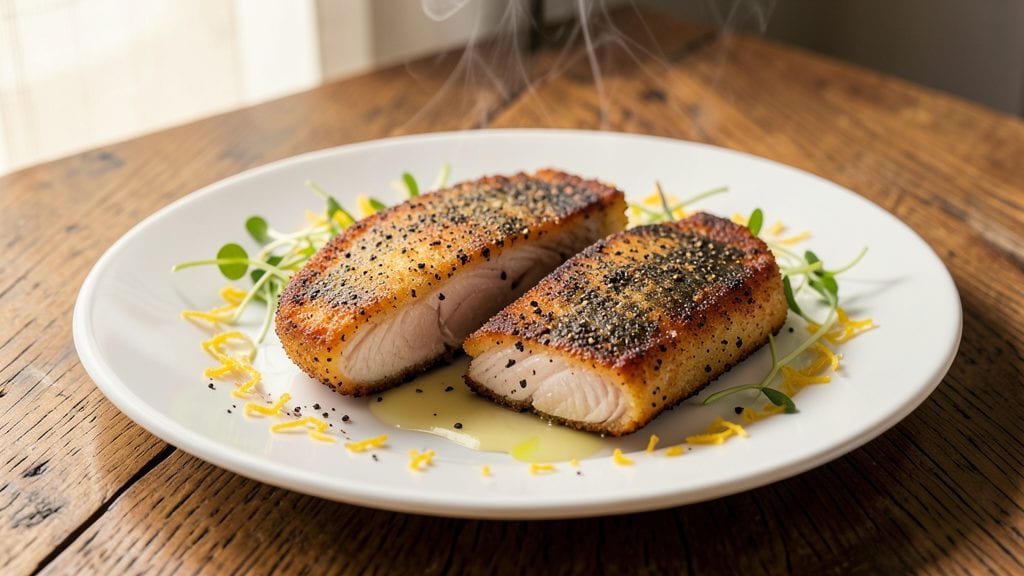
Frying bass with a crispy cornmeal crust transforms this delicate fish into a restaurant-worthy dish that's surprisingly simple to master at home. The secret lies in properly preparing the fillets—pat dry, seasoned lightly, and coated in a fine cornmeal mixture that creates that coveted golden crunch.
I've perfected this technique over years of testing, and the difference between a good fried bass and an exceptional one comes down to these precise steps.
What makes this recipe stand out is the balance of texture and flavor—crispy on the outside, tender on the inside, with a subtle buttery richness from the cornmeal crust.
Unlike many fried fish recipes that rely on heavy breading, this method uses just enough cornmeal to create that signature crunch without overwhelming the natural sweetness of the bass. The key is maintaining the right oil temperature throughout the frying process, which ensures even cooking and prevents soggy crusts.
By the time your bass emerges from the oil, you'll have fillets with a perfect golden-brown crust that shatters at the touch, revealing moist, flaky flesh underneath.
The aroma alone will have everyone gathered around the table, and the first bite delivers that satisfying contrast between crispy exterior and tender interior. This is the kind of dish that elevates a simple weeknight dinner into something memorable, without requiring advanced skills or expensive equipment.
Serve immediately with lemon wedges, tartar sauce, or a simple vinaigrette to complement the rich flavor of the fish. The crispy cornmeal crust pairs beautifully with these accompaniments, creating a complete meal that feels both comforting and refined. Let's get started on creating your perfect fried bass.
Ingredients for frying bass
The secret to golden crunch lies in these 13 ingredients—simple but precise.
| Ingredient | Amount | Notes |
|---|---|---|
| Fresh Bass Fillets 🐟 | 1 ½ lb | Skin-on, center-cut preferred |
| Fine Cornmeal 🌽 | 1 cup | White or yellow, stone-ground |
| All-Purpose Flour 🌾 | ½ cup | Lightly toasted for depth |
| Unsalted Butter 🧈 | 2 tbsp | Melted, cooled slightly |
| Salt 🧂 | 1 ½ tsp | Kosher or sea salt |
| Ground Black Pepper 🌶️ | ½ tsp | Freshly ground preferred |
| Garlic Powder 🧄 | ½ tsp | For subtle seasoning |
| Vegetable Oil 🫒 | 3 cups | High smoke point, like peanut |
| Lemon Wedges 🍋 | 4 whole | For serving |
| Tartar Sauce 🍅 | ½ cup | Homemade or store-bought |
| Paprika 🌶️ | ½ tsp | Smoked for color and flavor |
| Cornstarch 🌾 | 1 tbsp | For extra crispiness |
| Ice Water 💧 | 2 cups | For chilling fillets |
The bass fillets are non-negotiable—center-cut pieces with skin stay together best during frying. Local seafood markets often carry the freshest cuts, but if buying frozen, look for fillets previously frozen once. Pat them bone-dry before seasoning—moisture is the enemy of crispiness. For cornmeal, Bob’s Red Mill stone-ground is my go-to, but any fine, white or yellow cornmeal will work. Toasting the flour and cornmeal together in a dry pan for 2 minutes enhances their flavor without adding bulk. The vegetable oil should have a high smoke point (350°F+), with peanut oil being ideal for its neutral taste and stability.
No cornmeal? Panko breadcrumbs mixed with cornstarch can substitute in a pinch, though the texture will differ slightly. The butter adds subtle richness—unsalted is key to control seasoning. For extra crispiness, add an extra tablespoon of cornstarch to the coating. If you’re out of garlic powder, fresh minced garlic at half the amount works beautifully. The ice water bath after frying is crucial—it stops the cooking process instantly and keeps the crust from turning greasy. For serving, homemade tartar sauce elevates the dish, but store-bought in a squeeze bottle is perfectly fine.
Freshly fried bass is best served immediately, but you can hold it for up to 15 minutes in a 200°F oven if needed. Store leftovers in the fridge for 2 days, though the crust loses crispiness over time. For freezing, coat the fillets in extra cornmeal before sealing in an airtight container—this preserves texture. Reheat in a 350°F oven for 5-7 minutes to restore some crunch. The lemon wedges should be added just before serving to prevent sogginess.
Why You'll Love This Recipe
- Three-Ingredient Crust: I swear by this combo—just flour, cornmeal, and a pinch of salt. The cornmeal gives that perfect crunch without needing a million spices, and the butter makes sure every bite stays golden and tender.
- Weeknight Magic: Honestly, this is my go-to when I don’t want to think too hard. Pat the fillets dry, dredge them in the mix, and fry them in butter while I toss a simple salad. Done. No stress, no fuss—just crispy, buttery bass.
- Leftovers? No Problem: Between us, fried bass reheats better than most things. Toss the leftovers in a paper bag with a little cornmeal for 5 minutes in the oven, and they’ll be just as crispy as the first time. (Yes, even on a Tuesday night.)
- Budget-Friendly Catch: Fresh bass might sound fancy, but it’s often cheaper than store-bought fillets—and this recipe uses it up fast. A single fillet feeds two, and the rest of the ingredients cost pennies. That’s a win for my wallet and my taste buds.
Step-by-step instructions for crispy cornmeal-crusted bass
Here's how to achieve that perfect golden crunch every time—no shortcuts, just proven technique.
Prepare the Fillets for Maximum Crispiness
Pat the 1.5 lb fresh bass fillets completely dry with paper towels, pressing firmly to remove all moisture. This step is non-negotiable—wet skin prevents the crust from forming properly. Place each fillet in a shallow dish and season both sides generously with 1.5 tsp salt, 0.5 tsp ground black pepper, and 0.5 tsp garlic powder. Let them sit uncovered in the refrigerator for 15 minutes while you prepare the crust mixture.
While the fillets rest, lightly toast the 0.5 cup all-purpose flour in a dry skillet over medium heat for 2-3 minutes until fragrant. This adds depth to the crust. In a medium bowl, whisk together the toasted flour, 1 cup fine cornmeal, 0.5 tsp paprika, and 1 tbsp cornstarch. Set aside—this will create that signature golden crunch.
Create the Perfect Crust Coating
In a separate bowl, melt the 2 tbsp unsalted butter and let it cool slightly. Add the cooled butter to the flour-cornmeal mixture and stir until evenly distributed. The butter should be warm enough to coat but not hot enough to cook the flour. Dip each seasoned fillet into the melted butter mixture, then press gently into the cornmeal flour blend, ensuring full coverage on all sides.
For extra crispiness, I like to press the crust onto the fillets with my fingers, making sure it adheres firmly. Place the coated fillets on a wire rack set over a baking sheet and refrigerate for 10 minutes. This chilling step helps the crust set and prevents it from falling off during frying.
Fry to Golden Perfection
Pour the 3 cups vegetable oil into a deep skillet or Dutch oven and heat over medium heat until it reaches 350°F on a deep-fry thermometer. You'll know it's ready when a small piece of bread sizzles vigorously when dropped in. Working in batches to avoid overcrowding, carefully slide the chilled fillets into the hot oil.
Fry for 3-4 minutes per side until the crust is deep golden brown and the fish flakes easily with a fork. The oil temperature should remain steady at 350°F—if it drops below 340°F, the crust won't crisp properly. Transfer the fried fillets to a paper towel-lined plate to drain excess oil, but don't blot—they'll stay crispy if you let the oil drip off naturally.
Serve Immediately with Classic Accompaniments
While the fillets are still hot, arrange them on a serving platter and garnish with the 4 whole lemon wedges. The acidity cuts through the richness of the fried crust beautifully. Serve immediately with the 0.5 cup tartar sauce on the side for dipping—this is where the magic happens.
For presentation, I like to fan the lemon wedges around the plate and drizzle any accumulated oil from the plate back over the fillets. This keeps everything moist and adds an extra layer of flavor. The crust should be shatteringly crisp while the fish remains tender inside—this is the hallmark of a perfect fried bass.
Pro Tips For Making Frying Bass
- Pat the fillets DRY: Wet skin = soggy crust. After rinsing, press the fillets between paper towels—harder than it sounds, but worth it. I used to skip this and ended up with a sad, greasy mess instead of that perfect golden crunch.
- Use a mix of butter and oil: Pure butter burns fast. Melt 3 tablespoons butter with 2 tablespoons oil in your pan—enough to coat the bottom without swimming. The oil gives you time to cook the fish without smoking the kitchen.
- Don’t overcrowd the pan: One fillet at a time, or you’ll steam them instead of fry. I learned this after watching my first batch turn out greasy and limp. Give each piece space to sizzle freely—patience here keeps the crust crisp.
- Rest the fish 5 minutes: Skip this, and the crust will crack like a brittle shell. Tent loosely with foil and let it sit while you finish the batch. The steam inside keeps the inside tender while the crust stays intact—trust me, it matters.
Creative variations of these flavors
Southern-Style Crispy
For a classic Southern twist, replace the cornmeal with a 50/50 mix of fine cornmeal and all-purpose flour, then add 1 tsp smoked paprika and ½ tsp cayenne to the coating.
Fry the fillets in peanut oil at 375°F for 2-3 minutes per side—the higher heat creates an extra-crispy crust. Serve with hushpuppies and a side of spicy remoulade for a full Southern feast. 🌶️
Air-Fryer Crunch
Skip the deep-frying entirely by using an air fryer for a lighter but still crispy version. Coat the fillets as directed, then air-fry at 390°F for 8-10 minutes, flipping halfway.
The result is a golden, shatteringly crisp crust with far less oil. Pair with lemon-herb roasted potatoes for a healthier take. ⚡
Tempura Twist
For a Japanese-inspired version, replace the cornmeal with ½ cup rice flour and ½ cup potato starch, then add 1 tbsp grated ginger to the coating.
Fry at 340°F for 2-3 minutes per side—the starch creates an ultra-light, lacy crust. Serve with wasabi mayo and pickled ginger for an authentic experience. 🍶
Spicy Cajun Crust
Infuse the crust with Cajun flavors by mixing 1 tbsp Cajun seasoning (like Tony Chachere’s) into the cornmeal blend. Add 1 tbsp chopped fresh parsley for color.
Fry as usual, then garnish with extra parsley and serve with cooling avocado crema. The heat balances perfectly with the creamy dip. 🔥
Gluten-Free Adaptation
Make this dish gluten-free by using 100% cornmeal (no flour) and tapioca starch instead of all-purpose flour. The crust will still be crispy and golden, just slightly more delicate. Serve with gluten-free tartar sauce and roasted asparagus for a safe, flavorful meal. 💪
Herb-Infused Butter
Elevate the flavor by infusing the 2 tbsp melted butter with 1 tsp chopped fresh thyme and 1 tsp chopped fresh dill. Let it cool before mixing with the cornmeal.
The herbs add a bright, aromatic note that pairs beautifully with the crispy crust. Garnish with extra fresh herbs before serving. ✨
Nutrition facts
Frequently asked questions
What's the best oil for frying bass?
Use peanut oil or vegetable oil with a high smoke point (350°F+). Peanut oil has a neutral taste and stays stable at high heat, while vegetable oil is more affordable. Avoid olive oil—it burns at lower temperatures and can make the crust greasy.
Can I use frozen bass for this recipe?
Yes, but thaw it properly first. Place frozen fillets in a sealed bag and submerge in cold water for 30 minutes, changing the water every 10 minutes. Pat completely dry before seasoning—any moisture ruins the crispy crust. Never thaw at room temperature.
How do I fix a soggy crust?
Soggy crusts usually mean the oil was too cool or the fillets weren't dry enough. Next time, use a deep-fry thermometer to maintain 350°F oil, and pat fillets extra dry with paper towels. Also, chill coated fillets for 10 minutes before frying to help the crust set.
What's the best way to store leftovers?
Store fried bass in an airtight container in the fridge for up to 2 days. To reheat, place in a 350°F oven for 5-7 minutes—this restores some crispiness. For longer storage, freeze coated fillets (extra cornmeal helps) for up to 1 month.
Can I make this recipe gluten-free?
Replace the flour with 100% cornmeal and add 1 tbsp tapioca starch for binding. The crust will be slightly more delicate but still crispy. Serve with gluten-free tartar sauce and roasted vegetables for a safe, flavorful meal.