Snacks
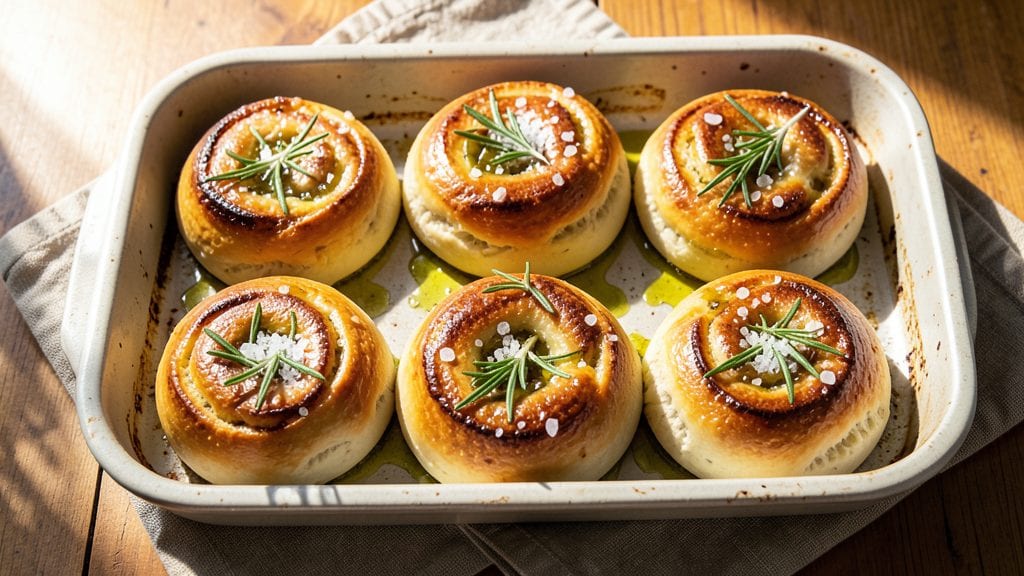
The focaccia rolls recipe delivers crispy, golden olive oil-kissed bread that transforms any snack time into a gourmet experience. These individual-sized rolls combine the airy texture of focaccia with the convenience of bite-sized portions, perfect for sharing or solo indulgence.
The secret lies in a simple yeast dough that bakes up with a crisp exterior and tender crumb—no fancy techniques required.
What sets these apart is the 25-minute bake time, making them ideal for weeknight cravings or last-minute gatherings. A light olive oil brush before baking creates that signature golden crust, while herbs or flaky salt add depth without overpowering.
The dough is forgiving enough for beginners but refined enough to impress guests—just like a professional bakery’s version.
By the time they emerge from the oven, you’ll have crispy, aromatic rolls with a tender interior that pairs perfectly with soups, dips, or even as a side for charcuterie boards.
The aroma alone will have everyone asking for seconds. Whether you stick to classic olive oil or experiment with garlic-infused toppings, these rolls deliver restaurant-quality results at home.
For extra flair, try adding rosemary or Parmesan before baking—just a sprinkle transforms the flavor profile. The recipe scales easily, so double the batch for parties or freeze extras for quick meals later. Let’s get baking!
Ingredients for focaccia rolls
Eleven essential ingredients transform simple flour into golden focaccia rolls with crispy crusts and tender crumb.
| Ingredient | Amount | Notes |
|---|---|---|
| Active Dry Yeast 🍞 | ¼ tsp | Standard proofing temperature |
| Warm Water 💧 | 1 cup | 110°F for ideal activation |
| All-Purpose Flour 🌾 | 3 cups | Bread flour preferred for chew |
| Extra-Virgin Olive Oil 🫒 | ½ cup | Light fruity variety recommended |
| Granulated Sugar 🍚 | ½ tsp | Enhances yeast activation |
| Diamond Crystal Kosher Salt 🧂 | 1 ½ tsp | Fine grain preferred |
| Fresh Rosemary 🌿 | ½ tsp | Finely chopped for aroma |
| Flaky Sea Salt 🧂 | 1 tbsp | Maldon preferred for texture |
| Garlic Cloves 🧄 | 2 cloves | Minced for subtle flavor |
| Large Eggs 🥚 | 1 whole | Room temperature for mixing |
| Cornmeal 🌽 | ¼ cup | For dusting baking sheet |
The yeast quality is non-negotiable—Saf-Instant or Red Star brands activate reliably. Whole Foods or Trader Joe's carry excellent options, but check expiration dates. For flour, King Arthur bread flour yields superior texture, though all-purpose works in a pinch. The olive oil should be extra-virgin with fruity notes—California Olive Ranch or Colavita are reliable choices. Rosemary and garlic should be freshly minced for vibrant flavor; pre-minced jars lack potency. Store-bought flaky salt like Maldon creates the signature crunch, but Diamond Crystal kosher salt works if toasted briefly in a dry pan.
No fresh rosemary? Dried oregano at half the amount provides a similar earthy depth. Substitute avocado oil for olive oil if dietary restrictions apply, though texture may differ slightly. Garlic powder lacks complexity, but 1/2 teaspoon can replace the minced cloves in a bind. For a sweeter profile, swap the granulated sugar for honey or maple syrup—reduce other liquids by 1 tablespoon to maintain dough consistency. The egg can be omitted for vegan versions, though rolls may be slightly less tender. Always measure flour by weight for precision—1 cup flour weighs 4.5 ounces when packed.
Fresh yeast requires refrigeration until use, while flour should be stored in a cool, dark place for up to 6 months. Olive oil and eggs keep for 6 months and 4 weeks respectively in the fridge. Prepped dough can be refrigerated for 24 hours or frozen for 3 months—thaw overnight in the fridge before baking. For extra crunch, bake rolls directly on the cornmeal-dusted sheet without transferring. Leftovers reheat beautifully in a 350°F oven for 5 minutes, restoring crispiness.
Why You'll Love This Recipe
- No-Knead Magic: I swear by this dough—just mix, let it rest, and boom. No standing at the counter, no sore arms. That yeast and warm water combo does all the work while I sip my coffee.
- Olive Oil Bliss: The moment those rolls hit the oven, that extra-virgin olive oil turns into pure flavor gold. Rich, buttery, with a crispy edge that’s impossible to resist. (Yes, I eat them straight out of the pan.)
- Weeknight Wonder: These rolls are my secret weapon for lazy nights—toss in garlic and herbs for dinner, or keep them plain for breakfast. They reheat like a dream, so I make a double batch and freeze half.
- Budget-Friendly Staple: Five ingredients, zero guilt. The flour and olive oil stretch far, and leftovers? Crumbs for tomorrow’s pancakes or toast for a quick bite. Minimal cost, maximum satisfaction.
Step-by-step instructions for focaccia rolls
Aromatic, golden focaccia rolls with crisp edges and tender crumb—ready in just 25 minutes.
Activate the Yeast for Maximum Rise
In a small bowl, combine the 1 cup warm water (tested at 110°F—too hot kills yeast, too cool slows activation) with the 0.25 tsp active dry yeast and 0.5 tsp granulated sugar. Let sit for 5 minutes until foamy. This confirms your yeast is alive and ready to work. If no foam forms, your yeast is dead—start over.
Next, whisk in the 3 cups all-purpose flour and 1.5 tsp diamond crystal kosher salt until a shaggy dough forms. The dough will look dry at first, but don’t panic—this is normal. Add the 0.5 cup extra-virgin olive oil and 1 whole large egg (room temperature) and mix with a wooden spoon until fully incorporated. The dough should come together into a sticky, cohesive mass.
Knead and Shape for Even Texture
Transfer the dough to a lightly floured surface and knead for 5 minutes by hand, folding and pressing until smooth. You’re aiming for a dough that springs back slightly when pressed but still feels pliable. If it’s too sticky, wet your hands—dry flour will toughen the rolls.
Divide the dough into 4 equal portions (about 6 ounces each). Roll each into a 12-inch log, then coil gently into a loose spiral. Place on a parchment-lined baking sheet dusted with 0.25 cup cornmeal to prevent sticking. Cover loosely with a damp towel and let rise for 15 minutes in a warm spot—you’ll see them puff about 25%.
Infuse with Rosemary and Garlic
Preheat your oven to 400°F while the dough rises. Once puffed, use your fingers to gently press dimples into the dough, creating pockets for flavor. Sprinkle evenly with the 0.5 tsp finely chopped fresh rosemary, 2 minced garlic cloves, and 1 tbsp flaky sea salt. Drizzle generously with any remaining olive oil (about 1 tbsp) to ensure a crisp, golden crust.
Bake for 12–15 minutes until the rolls are deep golden brown and internal temperature reaches 190°F. The edges should be crisp, but the centers should still feel slightly soft to the touch—this ensures a tender crumb. Rotate the baking sheet halfway through for even browning.
Rest and Serve Warm
Remove the rolls from the oven and let them rest on the baking sheet for 5 minutes. This allows the steam to redistribute, preventing a gummy texture. Serve immediately with extra flaky sea salt and a drizzle of olive oil for that signature focaccia kiss.
For best results, serve while still warm—the crust will crisp up as they cool. Store leftovers wrapped in a clean kitchen towel to retain moisture, and reheat in a 350°F oven for 5–7 minutes to restore that golden crunch.
Pro Tips For Making Focaccia Rolls
- TEST YOUR YEAST FIRST: Skip the guesswork—proof your yeast in warm water with a pinch of sugar before mixing with flour. If it doesn’t foam in 5-10 minutes, toss it and start fresh. I learned this the hard way after baking a flat, dense focaccia roll batch because the yeast was old and sluggish.
- STRETCH THE DOUGH: After the first rise, wet your hands and stretch the dough gently in all directions—don’t punch it down. This creates those signature air pockets and a lighter texture. Think of it like giving the dough a quick massage, not a workout.
- OIL THE PAN WELL: Use about 2 tablespoons of extra-virgin olive oil to coat the baking pan thoroughly, including the sides. If the oil pools or the dough sticks, you didn’t use enough. Trust me, your rolls will crisp up better and release cleaner.
- SECOND RISE MATTERS: Don’t skip the second rise—let the shaped rolls sit for at least 30 minutes until they’ve puffed noticeably. Rushing this step means denser, less flavorful rolls. I know, waiting is hard, but it’s the thing that actually changes the outcome.
Dietary considerations for these flavors
Gluten-Free Adaptation
Replace the 3 cups all-purpose flour with a 1:1 gluten-free baking flour blend like King Arthur Measure for Measure or Bob’s Red Mill. Add 1 extra tablespoon of xanthan gum to mimic gluten’s structure.
Use ½ cup almond milk instead of water for yeast activation, as it’s less likely to kill the yeast. The dough will be stickier, so wet your hands when handling. Bake at 375°F for 14-16 minutes—gluten-free rolls need slightly lower heat to prevent burning. 🌾
Vegan Version
Skip the 1 whole large egg and replace it with 1 tablespoon ground flaxseed mixed with 3 tablespoons water—let it sit for 5 minutes to thicken. Use vegan olive oil (like Colavita’s vegan line) and ensure your yeast is active.
The texture will be slightly denser, but the flavor remains rich. Add ½ teaspoon apple cider vinegar to the dough for extra lift. 💚
Low-Carb Option
Swap the flour for almond flour (use 2 cups for structure) and add ½ cup psyllium husk powder to bind. Reduce the olive oil to ¼ cup and omit the sugar entirely.
The dough will be drier, so add 2 tablespoons warm water as needed. Bake at 350°F for 18-20 minutes—these rolls are denser but packed with flavor. 🥑
Allergy-Friendly Swaps
For nut allergies, use sunflower seed flour instead of almond flour. If garlic is an issue, replace the 2 minced garlic cloves with ½ teaspoon asafoetida powder (hing)—it mimics garlic’s savory depth without the allergen. Always check labels for cross-contamination warnings, especially with gluten-free or nut-free products. 🚫
Dairy-Free Considerations
The recipe is naturally dairy-free, but ensure your flaky sea salt and olive oil are certified dairy-free (some brands process in shared facilities). For extra richness, add 2 tablespoons nutritional yeast to the dough—it adds a cheesy flavor without lactose.
Store-bought flours like King Arthur’s gluten-free blend are typically dairy-free, but double-check the label. 🧀
Nutrition facts
Frequently asked questions
Can I make these focaccia rolls without yeast?
No, yeast is essential for the signature airy texture. For a quick alternative, try using 1 teaspoon baking powder and 1 teaspoon baking soda instead, but the flavor and texture will differ—expect denser, less flavorful rolls. The yeast creates those signature pockets and crispy crusts that define focaccia.
Why did my focaccia rolls turn out dense instead of crispy?
Dense rolls usually mean the dough didn't rise enough. Check your yeast—it may be old or expired. Ensure your water is 110°F (not boiling), and let the dough rise in a warm spot (like a turned-off oven with a bowl of hot water inside). Over-kneading or skipping the rest after baking can also make them gummy.
How do I prevent the rolls from sticking to the baking sheet?
Dust your baking sheet generously with cornmeal or semolina before shaping the dough. Avoid flour—it burns easily. For extra insurance, use parchment paper and dust that with cornmeal. If the dough is too sticky, wet your hands slightly when handling to avoid tearing.
Can I make focaccia rolls ahead of time?
Yes! Shape and rise the dough, then refrigerate it for up to 24 hours before baking. For longer storage, freeze the shaped (unbaked) rolls wrapped in plastic for 3 months. Thaw overnight in the fridge before baking. Reheat leftovers in a 350°F oven for 5 minutes to restore crispiness.
What are the best toppings for focaccia rolls?
Classic options include fresh rosemary, minced garlic, flaky salt, and extra olive oil. For variety, try cherry tomatoes, sun-dried olives, or Parmesan cheese before baking. After baking, drizzle with balsamic glaze or honey for sweetness. Experiment with smoked paprika or chili flakes for heat.