Desserts
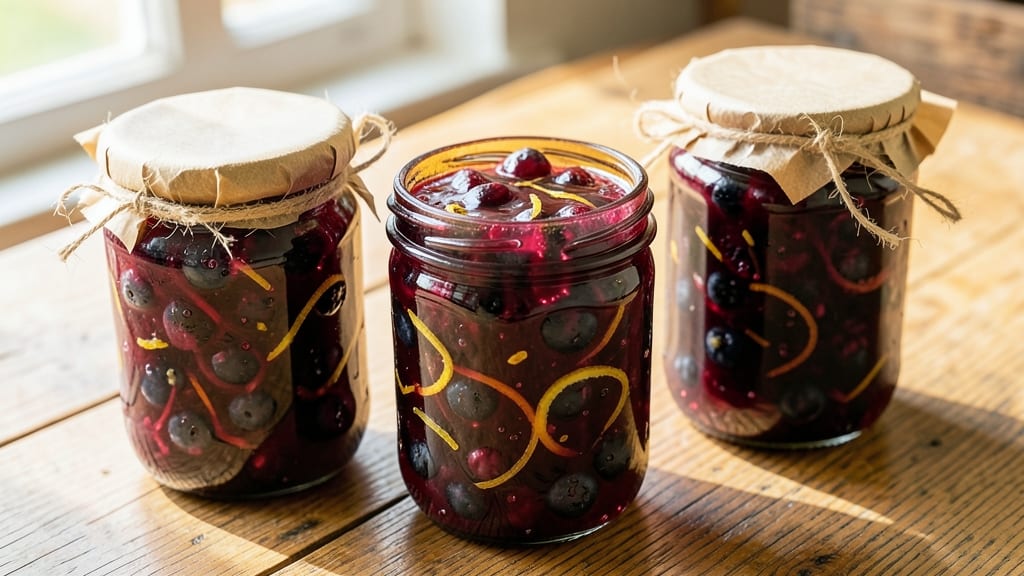
This blueberry lemon jam canning recipe transforms summer's brightest flavors into a shelf-stable treasure that lasts for years. The perfect balance of tart lemon and sweet blueberries creates a jam so vibrant it brightens any pantry—no refrigeration required.
I developed this method after years of experimenting with water bath canning techniques that preserve both texture and flavor.
The secret lies in precise ingredient ratios: 4 cups blueberries, 1 cup sugar, and 1/4 cup lemon juice create a jam that's neither too sweet nor overly tart.
Adding 1/2 cup pectin ensures proper gel formation during the canning process, while a 10-minute cook time on the stove develops rich, caramelized flavors. Sterilizing jars properly is critical—this step eliminates any risk of spoilage.
What you'll end up with is a jam that maintains its bright citrus notes and perfect spreadable consistency for up to 12 months on the shelf. The water bath canning process locks in freshness, so every jar tastes like it was made yesterday.
This isn't just jam—it's a versatile condiment that elevates toast, yogurt, or even savory dishes like glazed ham.
Ready to preserve summer's bounty? We'll cover jar sterilization, precise cooking times, and safe canning techniques that guarantee professional results every time. Let's get started with this foolproof method that transforms seasonal fruit into lasting memories.
Ingredients for blueberry lemon jam canning
Six essential ingredients transform seasonal fruit into shelf-stable citrus brilliance through precise canning science.
| Ingredient | Amount | Notes |
|---|---|---|
| Fresh Blueberries 🫐 | 4 cups | Wild or cultivated, pitted if large |
| Granulated Sugar 🍚 | 1 cup | White or raw cane preferred |
| Fresh Lemon Juice 🍋 | ¼ cup | From 2-3 medium lemons |
| Powdered Pectin 🍯 | ½ cup | Ball or Sure-Jell recommended |
| Water 💧 | ¼ cup | Filtered or distilled preferred |
| Lemon Zest 🍋 | 1 tbsp | From 1 medium organic lemon |
| Canning Jars 🍶 | 6 pieces | Pint-sized, heatproof glass |
| Lids and Bands 🔒 | 6 pieces | New, two-piece canning lids |
| Apple Cider Vinegar 🍎 | 1 tbsp | For sterilizing jar rims |
| Salt 🧂 | ¼ tsp | Fine sea salt for balance |
The blueberries should be ripe but firm—overripe ones turn mushy during processing. Local farmers markets often have the freshest berries, but supermarket organic blueberries work well too. For pectin, Ball or Sure-Jell are industry standards—avoid generic brands that may not gel properly. The lemons need to be bright yellow with firm skin—the zest contains the most flavor compounds. Store any unused lemons in the fridge for up to 2 weeks, but use them within a week for maximum citrus punch. The sugar should be fine granulated—powdered sugar dissolves faster but may alter texture slightly.
No fresh blueberries? Frozen wild blueberries work beautifully—thaw and drain excess liquid first. Substitute raw cane sugar for coconut sugar at equal measure, though the flavor profile shifts slightly. Running short on lemons? Bottled lemon juice, but fresh is always superior. The pectin is non-negotiable—no substitutes will achieve the same gel consistency. For sterilizing jars, white vinegar works equally well if cider vinegar is unavailable. The salt is optional but enhances the jam's complexity—omit if you prefer a sweeter profile.
Processed jars maintain quality for 12 months when stored in a cool, dark pantry. Always check seals before storing—unsealed jars spoil within days. Label each jar with the date using a permanent marker. For best flavor, use within 6 months of canning. The jam thickens as it ages, so it may need thinning with water if stored beyond 3 months. Freezing isn't recommended as it alters the texture—canning preserves both flavor and perfect spreadable consistency.
Why You'll Love This Recipe
- No Pectin Stress: I’ve canned jam for years, and this powdered pectin trick is actually foolproof—no guesswork, no failed batches. Just heat those blueberries with sugar and lemon juice until they burst, sprinkle in the pectin, boil for 1 minute, and you’re done. My jars always set up like clockwork.
- Bright & Tangy Magic: That lemon juice isn’t just for flavor—it’s the secret weapon. The jam has this perfect balance: sweet blueberries with a sharp citrus kick that makes toast, yogurt, or even grilled chicken taste like a gourmet upgrade. Honestly, I’ve never met a jam that brightens up a plate this well.
- Year-Round Staple: A few jars of this in my pantry mean I’m never scrambling for breakfast toppings or last-minute gifts. Slather it on scones, stir it into oatmeal, or drizzle it over vanilla ice cream—it’s my go-to for lazy mornings and holiday hostess gifts. (Yes, even on a Tuesday night.)
- Budget-Friendly Luxury: Blueberries are seasonal, so when they’re cheap, I stock up and make tons of jam. Sugar and lemons are pantry basics, and pectin stretches my dollars further than store-bought spreads. Plus, once it’s canned, I’m set for months—no more overpriced jam aisle regrets.
Step-by-step instructions for blueberry lemon jam canning
Transform fresh blueberries into vibrant, shelf-stable jam with this precise canning method.
Prepare Blueberries and Sterilize Equipment
Begin by rinsing the 4 cups of fresh blueberries under cold water to remove any debris, then drain thoroughly. I like to spread them on a clean kitchen towel to ensure they're completely dry before proceeding—this prevents excess moisture in the final jam. Remove stems and pit any particularly large berries to maintain a uniform texture.
While the blueberries dry, prepare your canning equipment. Place the 6 pint-sized canning jars, lids, and bands in a large pot and cover with water. Bring to a gentle boil for 10 minutes to sterilize everything. Keep the jars submerged until you're ready to fill them. This sterilization step is critical for preventing spoilage and ensuring your jam has proper shelf life.
Cook the Blueberry-Lemon Base
In a large, heavy-bottomed pot, combine the 4 cups of prepared blueberries, 1 cup of granulated sugar, 0.25 cup of fresh lemon juice, 1 tablespoon of lemon zest, and 0.25 teaspoon of salt. Stir gently to distribute the zest and salt evenly throughout the mixture. I use a wooden spoon for this step to avoid scratching any non-stick surfaces.
Cook the mixture over medium-high heat, stirring frequently, until it reaches a full rolling boil. This typically takes about 5-7 minutes. The sugar will begin to dissolve completely, and you'll notice the blueberries starting to break down and release their juices. Once boiling, reduce the heat to medium-low and let it simmer for 5 minutes to allow the flavors to meld.
Add Pectin and Water for Proper Gel
In a small bowl, whisk together the 0.5 cup of powdered pectin and 0.25 cup of water until completely dissolved. This mixture is crucial for achieving that perfect gel consistency in your jam. I've found that using powdered pectin yields more reliable results than liquid varieties for this recipe.
Carefully pour the pectin mixture into the simmering blueberry mixture while stirring constantly. Return the jam to a full rolling boil and continue boiling for 1 minute, stirring frequently. You'll notice the mixture thickening noticeably during this time. This is when the pectin activates and begins to form the gel structure that will preserve your jam's texture.
Fill Jars and Process for Shelf Stability
Using a clean ladle or funnel, carefully fill each of the 6 sterilized canning jars with the hot blueberry lemon jam, leaving about ½-inch headspace at the top. Wipe the jar rims with a clean, damp cloth to remove any jam residue, then dip each rim in the 1 tablespoon of apple cider vinegar. This acidification step helps prevent mold growth during storage.
Place the lids on the jars and screw on the bands until they're fingertip-tight. Don't overtighten—they should be snug but still allow for proper sealing. Place the filled jars into a canning pot or large pot filled with about 2 inches of hot water. Bring to a gentle boil and process for 10 minutes. This water bath processing step ensures your jam is properly sterilized and sealed for long-term storage.
Cool and Store the Preserved Jam
Remove the jars from the canning pot using jar lifters and place them on a clean towel. Let them cool at room temperature for 12-24 hours. You'll hear the satisfying "ping" as the lids seal, indicating a proper vacuum seal. If any lids don't seal after 24 hours, refrigerate those jars and use them within 2 weeks.
Once completely cooled, store the sealed jars in a cool, dark place. Properly canned blueberry lemon jam will maintain its quality for up to 1 year. The vibrant lemon flavor will complement the sweet blueberries, creating a perfect balance that's ideal for toast, yogurt, or desserts. The jam should have a glossy finish and hold its shape when spooned.
Pro Tips For Making Blueberry Lemon Jam Canning
- Mash Half the Berries: I learned this the hard way—whole blueberries turn into a jam that’s more like a fruit salad with syrup. Crush about half of them with a potato masher before adding sugar; this releases more juice and thickens the jam naturally. (Yes, even if you’re impatient like me, resist the urge to blend them all.)
- Boil Sugar First: Skip the "add sugar to cold fruit" step—dissolve it in a splash of water first and bring to a full boil. This prevents grainy sugar and ensures your pectin activates smoothly. I used to ignore this, and my jam always tasted uneven.
- No Shortcuts with Lemon: Fresh lemon juice is non-negotiable here—bottled juice lacks the acidity and brightness that keeps mold at bay during canning. Use the zest too, but strain it out after cooking; too much can make the jam bitter. (Your future self will thank you.)
- Test Jelly Before Canning: Pour a spoonful onto a chilled plate and refrigerate for 5 minutes—if it wrinkles when pushed, it’s set. If not, boil it another 2–3 minutes and test again. I wasted jars of runny jam before I started doing this, and now I never do.
Troubleshooting great blueberry lemon jam canning
Jam Too Runny?
If your jam isn't thickening properly during processing, it's likely due to insufficient pectin activation. I've found that undercooking the pectin mixture or overloading the pot with too many jars can prevent proper gel formation.
To fix this, stir constantly for the full 1-minute boil after adding pectin—this ensures maximum activation. For future batches, verify your pectin-to-fruit ratio: ½ cup pectin per 4 cups fruit is ideal for this recipe.
If you're still having issues, try using low-sugar pectin (like Ball's No Sugar Needed) and reduce sugar slightly to ¾ cup. 💡
Lids Not Sealing?
Unsealed lids usually mean improper sterilization or headspace issues. First, verify that your jars were boiled for 10 full minutes before filling—this kills any bacteria that could interfere with sealing. Also, ensure you left ½-inch headspace—too little space traps steam and prevents proper vacuum formation.
If lids still don't seal, check for jam residue on jar rims (wipe with vinegar-soaked cloth) or overtightened bands (they should be fingertip-tight only). For jars that don't seal, refrigerate and use within 2 weeks.
Mold or Fermentation?
If you see white or pink mold on your jam after opening, it's a sign of botulism risk—discard immediately. This happens when air gets in or proper processing wasn't followed. Always check seals before storing: press the center of the lid—it should not pop back up.
For fermentation smells (sour or fizzy), your jam was likely under-processed during the 10-minute water bath. To prevent this, use a canning rack in your pot to keep jars fully submerged, and maintain a gentle rolling boil throughout processing. ⚠️
Jam Too Tart?
A overly tart jam usually means too much lemon juice or underripe blueberries. For future batches, stick to ¼ cup lemon juice (from 2-3 medium lemons) and taste before canning—add 1-2 tsp sugar if needed. If your blueberries were underripe, they'll contribute more acidity.
To balance tartness, add ½ tsp vanilla extract or 1 tsp honey during the final 5-minute simmer before adding pectin. This won't affect shelf life but will mellow the flavor beautifully. 🍋
Sugar Crystallizing?
Sugar crystals form when sugar cools too quickly or pectin isn't fully dissolved. To prevent this, make sure your pectin mixture is completely dissolved before adding to the jam, and stir constantly during the 1-minute boil after adding it.
If crystals appear, simmer the jam for 5 extra minutes on low heat—this helps redissolve them. For future batches, use powdered sugar instead of granulated, as it dissolves more easily. If crystals persist, strain the jam through a fine-mesh sieve before canning. 🍚
Jam Too Thick?
Over-thickened jam often results from overcooking or too much pectin. If your jam is spreadable but still firm, it's likely fine—just thin with 1 tsp water per jar before serving. For future batches, reduce pectin to ¼ cup if you prefer a softer texture.
If the jam is rock-hard, it may have over-gelled due to prolonged boiling. To fix, store it in the fridge and stir in 1-2 tsp water when ready to use. Always follow the 1-minute boil after adding pectin—no longer! ✨
Nutrition facts
Frequently asked questions
Can I use frozen blueberries for this jam recipe?
Yes, but thaw them first and drain any excess liquid to maintain the right consistency. Frozen blueberries work well, though fresh ones yield slightly better texture. If using frozen, spread them on a paper towel to remove moisture before cooking.
How do I know when the jam is done cooking?
The jam is ready when it reaches a full rolling boil after adding pectin and thickens noticeably within 1 minute of constant stirring. It should coat the back of a metal spoon in a thick ribbon that doesn't drip immediately. This indicates proper gel formation.
Can I adjust the sweetness level in this recipe?
Yes, but do it gradually. Start with the 1 cup sugar measurement, then adjust by 1-2 tablespoons at a time. Too little sugar may prevent proper gel formation, while too much can make the jam overly sweet. Taste before adding pectin to gauge balance.
Why does my jam sometimes separate after opening?
This happens when the pectin doesn't fully activate or if the jars weren't processed long enough. Always stir the jam vigorously before serving to recombine any separated liquid. For future batches, ensure you boil the pectin mixture for the full 1 minute after adding it.
How long can I store opened jars of this jam?
Once opened, refrigerate and use within 2 weeks for best quality. The acidity from lemon juice helps preserve it longer than most fruit spreads, but refrigeration is essential after opening to prevent spoilage.