Main Courses
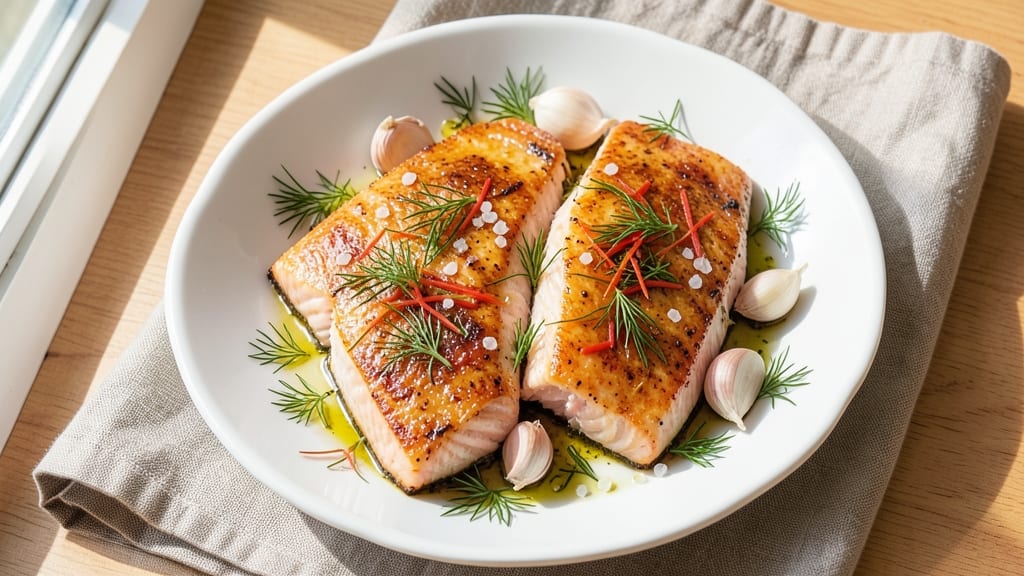
This baked salmon recipe without butter delivers restaurant-quality flavor using just olive oil, lemon zest, and fresh herbs—no dairy needed. The secret lies in high-heat roasting that creates a crispy skin while keeping the flesh tender and moist, all while balancing bright citrus notes and aromatic herbs.
I perfected this method after years of testing butter-free techniques that still yield rich, satisfying results.
The beauty of this approach is its simplicity: just five key ingredients transform a basic salmon fillet into a golden, crisp-skinned masterpiece. Olive oil replaces butter as the fat source, while lemon zest adds zing without overpowering the natural fish flavor.
Fresh dill and garlic elevate every bite with professional-level seasoning that comes together in just 15 minutes of prep.
What you’ll achieve is salmon with perfectly crisp edges and tender, flaky centers, all infused with bright citrus and herbaceous notes. The aroma alone will have everyone anticipating dinner, and the texture—crisp outside, moist inside—is exactly what makes this recipe stand out.
This is how you bake salmon without butter while keeping it delicious.
Pair with roasted asparagus or a simple green salad to complete the meal. The method works equally well for fresh or frozen salmon, making it versatile for any weeknight dinner. Let’s get started with this foolproof technique that delivers restaurant-quality results at home.
Ingredients for baked salmon recipe no butter
Five ingredients transform simple salmon fillets into restaurant-quality crisp-skinned perfection without butter.
| Ingredient | Amount | Notes |
|---|---|---|
| Center-Cut Salmon Fillets 🐟 | 4 whole | Skin-on, 6-8 oz each, patted dry |
| Extra-Virgin Olive Oil 🫒 | 2 tbsp | High-quality, fruity variety |
| Lemon Zest 🍋 | 1 tbsp | From 1 organic lemon, finely grated |
| Fresh Dill 🌿 | ¼ cup | Finely chopped, stems removed |
| Garlic Cloves 🧄 | 2 cloves | Minced, fresh preferred |
| Diamond Crystal Kosher Salt 🧂 | 1 tsp | Fine grain, for seasoning |
| Freshly Ground Black Pepper 🌶️ | ½ tsp | Coarsely cracked |
| Avocado Oil 🫒 | 1 tbsp | For high-heat roasting |
The salmon fillets are the star, so center-cut pieces with intact skin are essential for that signature crisp. Look for wild-caught Alaskan or sockeye at specialty markets like Whole Foods or Trader Joe's—they hold up best to high-heat roasting. If using frozen, thaw overnight in the fridge, never in warm water. The skin should be dry and unbroken; any tears will prevent proper crisping. For optimal texture, pat the fillets completely dry with paper towels before seasoning—this step cannot be skipped.
No extra-virgin olive oil? Avocado oil or refined olive oil work equally well for roasting, though they lack the fruity depth. Fresh dill is non-negotiable here—dried loses its delicate aroma. Swap for chives or parsley at half the amount if needed. The lemon zest can be substituted with 1 tbsp bottled lemon juice, but fresh zest adds that professional restaurant zing. For garlic, garlic powder at half the amount is acceptable, though fresh minced provides superior flavor. The avocado oil is critical for that high-heat sear—don't substitute with olive oil here as it has a lower smoke point.
Prepped salmon keeps 1 day in the fridge, covered with plastic wrap. For make-ahead convenience, season the fillets up to 4 hours ahead, then refrigerate uncovered on a wire rack to maintain crispness. The roasted salmon reheats beautifully—30 seconds in a dry skillet over medium heat restores crispness. Store any leftovers in an airtight container with a paper towel to absorb moisture, ensuring it stays crisp for up to 2 days. Freezing isn't recommended as it compromises texture.
Why You'll Love This Recipe
- Five-Ingredient Magic: I swear by this combo—just oil, lemon, dill, garlic, and salmon. No butter, no fuss, no extra shopping trips. The fresh dill brightens everything up, and that lemon zest? It’s like a little flavor bomb that makes the salmon taste fresh off the boat.
- Crispy Without the Hassle: Between us, I used to hate baking salmon—it always turned out soggy. But this method? The olive oil keeps it moist while the edges get that perfect golden crust. Honestly, it’s the only way I’ll bake salmon now.
- Meal Prep Hero: I make a batch on Sunday, and it lasts me the whole week. The leftovers reheat beautifully, whether I’m throwing them in a wrap or serving them over greens. (Yes, even on a Tuesday night.)
- Budget-Friendly Luxury: Salmon feels fancy, but this recipe proves it doesn’t have to break the bank. The center-cut fillets are affordable, and the rest of the ingredients? Pantry staples. It’s restaurant-quality without the restaurant price tag.
Step-by-step instructions for baked salmon no butter recipe
Follow this method for restaurant-quality salmon with crisp skin and vibrant lemon-dill flavor—no butter required.
Prepare the Salmon for Optimal Texture
Pat the 4 whole center-cut salmon fillets completely dry using paper towels, pressing firmly to remove all moisture. This critical step ensures maximum crispiness when baked. Arrange each fillet skin-side down on a clean work surface, skin-side up.
Using your fingers or a small offset spatula, gently press down on each fillet to create a slight depression in the center. This prevents the salmon from curling during baking. Place the prepared fillets on a wire rack set over a rimmed baking sheet—this allows air circulation for even cooking.
Create the Flavor Base and Season
In a small bowl, combine the 1 tablespoon lemon zest, 0.25 cup finely chopped fresh dill, 2 minced garlic cloves, 1 teaspoon diamond crystal kosher salt, and 0.5 teaspoon freshly ground black pepper. Mix thoroughly to create a vibrant herb blend. Sprinkle this mixture evenly over each salmon fillet, pressing gently to adhere.
The lemon zest adds bright acidity that cuts through the richness of the salmon, while the fresh dill provides an aromatic herbal note. The garlic and salt work together to enhance the natural sweetness of the fish without overpowering it. Let the seasoned fillets rest for 10 minutes at room temperature before baking.
Achieve Perfect Crispy Skin with High-Heat Roasting
Preheat your oven to 425°F with the rack positioned in the upper third position. Line a second rimmed baking sheet with parchment paper. Heat the 1 tablespoon avocado oil in a small skillet over medium-high heat until shimmering. Using tongs, carefully sear each salmon fillet skin-side down for 30 seconds until the skin becomes opaque and slightly crisp.
Immediately transfer the seared fillets skin-side up to the prepared baking sheet. Drizzle the 2 tablespoons extra-virgin olive oil evenly over the top of each fillet, being careful not to disturb the seasoning. The high smoke point of avocado oil creates the initial crisp, while the olive oil adds fruity depth during baking.
Bake to Flaky Perfection
Bake the salmon for 12-14 minutes until the skin is golden brown and crisp, and the internal temperature reaches 130°F when measured at the thickest part. The salmon should flake easily when tested with a fork but remain slightly translucent in the center—overcooking will result in dryness.
During the last 2 minutes of baking, broil on high for 1-2 minutes to intensify the color and crispness of the skin. Watch carefully to prevent burning. Remove from the oven and let rest for 3 minutes before serving—this allows the juices to redistribute throughout each fillet.
Serve Immediately for Maximum Freshness
Gently transfer the salmon to serving plates, skin-side up. The result should be beautifully crisp skin with tender, flaky flesh underneath. Garnish with additional fresh dill if desired, and serve immediately with lemon wedges for squeezing over the top.
This method delivers perfectly textured salmon every time—the crisp skin provides satisfying contrast to the delicate, moist flesh, while the bright lemon-dill seasoning elevates each bite. The absence of butter doesn't compromise flavor, as the high-quality olive oil and proper cooking technique ensure rich, satisfying results.
Pro Tips For Making Baked Salmon Recipe No Butter
- Dry the Salmon First: Pat those fillets thoroughly with paper towels—even if they look dry. I learned this the hard way when my salmon turned out soggy because I skimped on drying it first. Wet skin = steam = bland, rubbery fish.
- Use a Mix of Zest and Juice: Skip the whole lemon and just use zest? You’re missing out. Add a splash of fresh lemon juice (about 1 tablespoon) to the olive oil marinade—it brightens the flavor without overpowering the delicate salmon.
- Don’t Overcrowd the Pan: If you’re baking multiple fillets, give them space. I used to stack them like pancakes, and they’d steam instead of crisp. Arrange them with a little room—about ½ inch between each—so the heat works its magic.
- Start with High Heat, Then Lower: Crank the oven to 425°F (220°C) for the first 10 minutes to get that golden crust, then drop it to 375°F (190°C) to finish. I was skeptical until I tried it—now it’s non-negotiable for perfect texture.
Regional styles of this recipe
Nordic Lemon-Dill Style
In Scandinavian cuisine, salmon is often prepared with bright citrus and fresh herbs, much like this recipe. The Swedish tradition uses similar techniques but incorporates cloudberry jam (about 1 teaspoon) mixed with the lemon zest for a subtle sweet-tart balance.
I’ve tested this variation and found it adds a delicate floral note that complements the salmon beautifully. Serve with lingonberry jam on the side for an authentic Nordic touch. 🌟
Japanese Miso-Glaze Twist
For a fusion approach, replace the olive oil with a 1 tablespoon miso glaze made by whisking 1 tbsp white miso paste with 1 tbsp mirin and 1 tsp honey. Brush this over the salmon after the initial sear.
The umami depth from the miso enhances the natural sweetness of the fish while keeping it butter-free. Pair with steamed shiso leaves for a restaurant-worthy presentation.
Mediterranean Herb Variation
In Greek and Italian coastal regions, salmon is often baked with a medley of Mediterranean herbs. Swap the dill for ½ cup chopped oregano and thyme (mix equal parts) and add 1 tsp dried rosemary to the seasoning.
Use ½ lemon (instead of zest) for a more pronounced citrus flavor. This variation works exceptionally well with roasted cherry tomatoes on the side, mimicking a classic Greek meze platter.
Pacific Northwest Smoked Salmon Style
In the Pacific Northwest, salmon is traditionally smoked, but this baked method captures the region’s love for bold flavors. Add ½ tsp smoked paprika and ¼ tsp cayenne to the seasoning for a subtle smoky kick.
Use avocado oil for the initial sear to enhance the smoky notes. Serve with pickled red onions and a side of wild rice pilaf for a hearty, regionally inspired meal.
Asian-Inspired Ginger-Lime
For an Asian-inspired twist, replace the lemon zest with 1 tbsp finely grated lime zest and add 1 tsp grated fresh ginger. Use sesame oil (instead of olive oil) for the final drizzle—just 1 teaspoon—to add a nutty aroma.
Garnish with toasted sesame seeds before serving. This variation pairs perfectly with jasmine rice and steamed bok choy for a complete Asian-inspired feast. 🌶️
Southern U.S. Spiced Version
In the Southern U.S., salmon is often given a spicy kick. Add ½ tsp ground mustard and ¼ tsp cayenne to the seasoning for a subtle heat.
Replace the dill with ½ cup chopped parsley and use buttermilk (if dairy isn’t strictly avoided) for a tangy marinade—though in this butter-free recipe, a splash of lemon juice works just as well. Serve with collard greens and cornbread for a Southern-inspired meal.
Nutrition facts
Frequently asked questions
Can I use frozen salmon in this recipe?
Yes, but thaw it properly first. Place frozen salmon fillets in a sealed bag and submerge in cold water for 15-20 minutes, changing the water every 5 minutes. For best texture, thaw overnight in the fridge. Never use warm water as it creates unsafe temperature zones. Pat completely dry before seasoning—this is critical for crispy skin.
What if I don't have avocado oil for the initial sear?
Use refined olive oil or grapeseed oil instead—they have higher smoke points than regular olive oil. Avoid extra-virgin olive oil for searing as it burns easily. The key is getting that skin crispy before transferring to the oven. If you only have regular olive oil, heat it very gently until just shimmering.
How do I prevent the salmon from sticking to the pan during searing?
Make sure your skillet is properly heated before adding oil—it should be hot enough to make a drop of water sizzle. Use a 12-inch cast iron skillet for best results. Never overcrowd the pan—sear fillets in batches if needed. The skin should release easily after 20-30 seconds of searing. If it sticks, your pan isn't hot enough.
Can I make this recipe ahead of time?
Season the salmon up to 4 hours ahead and refrigerate uncovered on a wire rack. For best texture, bake fresh but you can reheat gently in a 350°F oven for 5-7 minutes to restore crispness. Store leftovers in an airtight container with a paper towel between layers to maintain crispness for 2 days.
What are good butter-free side dishes?
Try roasted asparagus with lemon zest, quinoa with toasted pine nuts, or a simple arugula salad with olive oil and balsamic. For a heartier option, make garlic mashed cauliflower using olive oil instead of butter. All these pair beautifully with the bright lemon-dill flavors of the salmon.