Main Courses
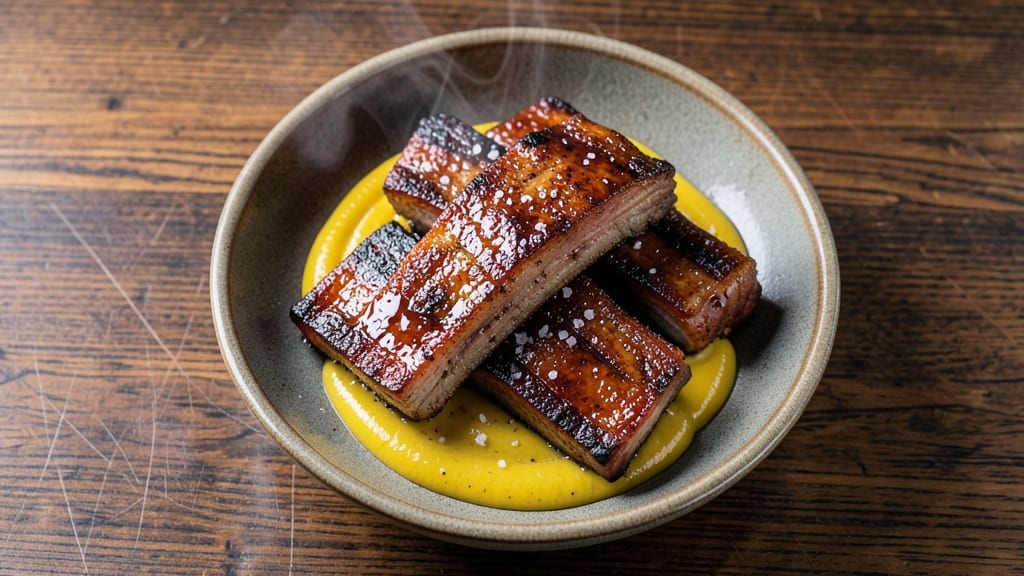
Mastering smoked beef spare ribs with fall-off-the-bone tenderness starts with understanding the bark-to-meat ratio—a technique I perfected after years of trial and error. The key lies in balancing a dark, flavorful crust with melt-in-your-mouth meat, achieved through precise temperature control and wood selection.
This isn't just a recipe; it's a method that transforms tough cuts into restaurant-quality results at home.
What sets this recipe apart is the 3-2-1 method: three hours of smoking at 225°F, two hours wrapped in butcher paper with apple juice for moisture, and one final hour unwrapped to develop that coveted bark.
Using a mix of hickory and cherry wood adds depth without overpowering the beef's natural flavor. The process requires patience, but the reward is ribs so tender they nearly disintegrate at the touch.
By the time you pull these ribs from the smoker, you'll have a dish that's rich in smoky aroma, deep in flavor, and impossible to resist. The bark will be dark and crispy, while the meat inside yields effortlessly.
This is the kind of meal that turns weeknight dinners into special occasions—no fancy restaurant required.
Serve with classic sides like coleslaw, baked beans, or cornbread to complete the experience. The leftovers reheat beautifully, making this a perfect recipe for meal prep or entertaining. Let's get started on creating ribs that will impress even the most seasoned pitmasters.
Ingredients for smoked beef spare ribs
Precision-cut beef spare ribs and carefully balanced dry rub create restaurant-quality bark-to-meat perfection.
| Ingredient | Amount | Notes |
|---|---|---|
| Beef Spare Ribs 🥩 | 4 lb | Bone-in, meaty spare ribs preferred |
| Yellow Mustard 🍯 | ¼ cup | For initial coating and moisture |
| Brown Sugar 🍚 | ½ cup | Light or dark, packed tightly |
| Coarse Kosher Salt 🧂 | ¼ cup | Diamond Crystal preferred |
| Smoked Paprika 🌶️ | 2 tbsp | For deep smoky flavor |
| Garlic Powder 🧄 | 1 tbsp | Freshly ground preferred |
| Onion Powder 🧅 | 1 tbsp | Enhances sweetness balance |
| Black Pepper 🌶️ | 1 tsp | Freshly cracked for intensity |
| Apple Juice 🍎 | 1 cup | Unpasteurized for moisture retention |
| Butcher Paper 📄 | 1 sheet | Heavyweight, 18x24 inches |
| Hickory Wood Chips 🌳 | 2 cups | Unseasoned, food-grade |
| Cherry Wood Chips 🍒 | 1 cup | For fruitiness balance |
| Wooden Skewers 🪵 | 6 whole | Soaked 30 minutes for serving |
The ribs are the foundation—look for meaty spare ribs with good marbling at your local butcher shop or Costco. Avoid St. Louis-style ribs; their bone structure won't yield the same tenderness. For wood, Traeger or Cookshack brands deliver consistent quality. The butcher paper is non-negotiable—regular paper tears and won't hold moisture. If you can't find it, heavy-duty aluminum foil works in a pinch, though the bark won't be as crispy. The wood chips should be unseasoned and food-grade—never use treated lumber.
No yellow mustard? Dijon mustard thinned with water works, though it lacks the same moisture retention. Substitute brown sugar with equal parts white sugar and molasses, but expect slightly different caramelization. For the wood, mesquite chips add intensity but can overpower if used alone—stick to the hickory-cherry blend for balance. The apple juice is critical for the wrap stage; white grape juice is a decent alternative. If you're short on time, pre-mixed dry rubs from Montana BBQ can save effort, though they lack the customization of making your own.
Store prepped ribs in the fridge for up to 24 hours before smoking. The wood chips keep for 6-12 months in a sealed container, while the dry rub maintains potency for 3 months if stored airtight. Leftover ribs reheat beautifully—350°F for 10-15 minutes wrapped in foil preserves moisture. For meal prep, portion into individual servings with a side of sauce on the bottom to prevent drying during reheating.
Why You'll Love This Recipe
- I’ll be real: most leftover ribs end up sad. Not these. The glaze stays sticky, the meat stays tender, and reheating them in the oven (or even the microwave, if you’re desperate) keeps them just as good. Plus, they’re cheap enough to make twice if you’re feeling greedy.
- Five-Ingredient Magic: I swear, you can’t mess this up. Just ribs, mustard, brown sugar, salt, and smoked paprika—no fancy marinades or hours of prep. That sweet-spicy crust? Pure flavor without the fuss.
- Smokehouse in Minutes: Between us, my smoker only needs 3-4 hours to turn tough ribs into fall-off-the-bone perfection. The brown sugar caramelizes into a sticky glaze while the paprika gives it that deep, smoky aroma—no babysitting required.
- Tailgate or Tuesday: Honestly, this recipe works for everything. Pack them for a game day spread, serve with mashed potatoes for a cozy weeknight, or freeze half for when you’re too tired to cook. The mustard keeps it bright enough for summer but rich enough for winter.
Step-by-step instructions for smoked beef spare ribs
Master the bark-to-meat ratio and low-and-slow technique for ribs that pull apart effortlessly.
Prepare the Ribs with the Dry Rub
In a medium bowl, combine the 0.5 cup brown sugar, 0.25 cup coarse kosher salt, 2 tbsp smoked paprika, 1 tbsp garlic powder, 1 tbsp onion powder, and 1 tsp black pepper. Mix thoroughly with your hands until the sugar and salt dissolve completely into the spices. This creates a cohesive, flavorful coating that will cling to the ribs.
Pat the 4 lb beef spare ribs dry with paper towels—this step is critical for developing a proper bark. Generously coat each rib with the yellow mustard, then press the dry rub into the meat, ensuring full coverage on all surfaces. The mustard acts as a binder and helps prevent the rub from falling off during smoking. Place the ribs on a wire rack set over a baking sheet to allow air circulation on all sides.
Set Up the Smoker with Wood Chips
Soak the 2 cups hickory wood chips and 1 cup cherry wood chips in water for at least 30 minutes before smoking. This ensures a steady, clean smoke rather than a smoky flare-up. Once soaked, drain and place the wood chips in your smoker's chip tray. Set the smoker temperature to 225°F and allow it to preheat for 15-20 minutes until you see a steady stream of thin, blue smoke.
Position the ribs on the smoker grates, bone-side down, to maximize smoke penetration. The apple juice will be added later to maintain moisture, but for now, let the ribs smoke undisturbed. Avoid opening the smoker during the first 2 hours—each time you peek, you lose heat and delay the cooking process. The goal is to maintain a consistent 225°F environment for even cooking.
Smoke and Spritz for Moisture Control
After 2 hours of smoking, check the internal temperature of the ribs using a meat thermometer. They should register around 160-165°F—this is when the "stall" typically occurs, where the temperature plateaus as moisture evaporates. At this point, remove the ribs from the smoker and wrap them tightly in the 1 sheet butcher paper, sealing the edges with a twist of the paper.
Return the wrapped ribs to the smoker and continue cooking until the internal temperature reaches 203°F, about 2-3 additional hours. Every hour after wrapping, spritz the ribs with apple juice through a small hole in the butcher paper. This keeps the meat moist and enhances the bark's development. The butcher paper allows the ribs to breathe while retaining moisture better than foil.
Rest and Serve with Wooden Skewers
Once the ribs reach 203°F, remove them from the smoker and let them rest on a cutting board for 15-20 minutes. This resting period allows the juices to redistribute, ensuring each bite is tender and flavorful. While the ribs rest, soak the 6 whole wooden skewers in water for 30 minutes to prevent burning when grilling or serving.
Slice the ribs between the bones, cutting through the membrane to separate each individual rib. Serve immediately with the skewers for easy handling. The ribs should have a deep mahogany bark on the outside and a tender, juicy interior that falls apart with minimal effort. Pair with a tangy coleslaw or crusty bread to complement the smoky, sweet flavors.
Pro Tips For Making Smoked Beef Spare Ribs
- TRIM THE FAT CAP: Beef spare ribs come with a thick layer of fat on the bone side—leave it on, but score it in a crosshatch pattern with a sharp knife. This lets the rub cling better and helps the sugar and paprika caramelize instead of just sticking to a greasy surface.
- SALT THE RIBS OVERNIGHT: Skip the last-minute salting—lay the ribs bone-side down on a tray, drizzle with a mix of 1 tablespoon coarse kosher salt and 1 teaspoon smoked paprika per pound, then refrigerate uncovered for 12–24 hours. The salt breaks down the proteins, and the paprika starts infusing early, giving you a deeper flavor without overpowering the mustard glaze later.
- WRAP AT 165°F: I used to pull these ribs at 195°F, thinking they’d be tender enough—but they’d still fight me when I tried to pull them apart. Now I wrap them in butcher paper (not foil) at 165°F and let them rest until they hit 203°F. The meat stays juicy, and the connective tissue melts without drying out, especially important for beef, which is leaner than pork ribs.
- USE DIJON INSTEAD OF YELLOW MUSTARD: Yellow mustard is fine, but Dijon adds a tangy depth that cuts through the sweetness of the brown sugar. Mix ¼ cup Dijon with ¼ cup yellow mustard, then brush it on in the last 30 minutes of cooking. The extra acidity also helps the glaze stick better to the ribs, so less drips down your smoker. (Yes, even if you’re not a fan of Dijon—trust me on this one.)
Troubleshooting perfect results
Temperature Fluctuations
If your smoker temperature keeps dropping below 225°F, you're likely dealing with a cold smoke issue. This happens when the firebox isn't hot enough or the smoker isn't properly insulated. I recommend using hardwood lump charcoal instead of briquettes for more consistent heat.
Also, check your smoker's gaskets—worn seals let heat escape. If you're using a pellet smoker, ensure the pellet hopper is full and the auger isn't clogged. A 10-15°F fluctuation is normal, but anything wider means you need to adjust the fire or close the vents slightly. 🌡️
Ribs Not Tender Enough
If your ribs are still tough after 8-10 hours in the smoker, they likely didn't reach the proper internal temperature. The 203°F rule is non-negotiable—anything below means the collagen hasn't fully broken down.
I've found that pre-soaking the ribs in apple cider vinegar for 30 minutes before applying the dry rub helps tenderize them faster. Also, double-check your thermometer—infrared models can be inaccurate for meat. A probe thermometer like the ThermoWorks Smoke is worth the investment for precise readings.
Bark Too Thin or Uneven
A thin or patchy bark usually means inconsistent moisture during the smoking process. The mustard coating is your friend here—make sure you're using full-fat yellow mustard (Dijon won't work as well). If your bark is uneven, it could be due to airflow issues in your smoker.
Try rearranging the ribs so they're not stacked too closely. For extra crispiness, I like to unwrap the ribs for the last 30 minutes of cooking—this lets the bark develop fully without steaming. Just be prepared to spritz frequently to prevent drying.
Ribs Too Dry or Stringy
Dry ribs are often the result of over-smoking or not enough moisture during the wrap phase. If you're using butcher paper, ensure it's not too thick—some brands are too heavy and can steam the meat instead of letting it breathe.
For the wrap, I always use apple juice (not water) because the natural sugars help caramelize the bark while keeping the meat moist. If your ribs are still dry, try adding a splash of beef broth to the juice for extra flavor and moisture.
Also, never skip the rest—ribs need that 15-20 minute rest to redistribute juices.
Smoke Too Heavy or Bitter
A bitter, overpowering smoke flavor usually means you're using too much wood or low-quality chips. Stick to the 2:1 hickory-to-cherry ratio and avoid mesquite unless you're going for a bold, almost charred flavor. If the smoke is too thick, open the smoker's vents slightly to increase airflow.
I also recommend soaking your wood chips for at least 45 minutes—this reduces flare-ups and ensures a cleaner smoke. If you're using a pellet smoker, try a milder wood blend like oak or pecan for a subtler flavor profile. 🌳
Ribs Sticking to the Grate
If your ribs are tearing when you try to remove them from the smoker grate, it's usually because of lack of fat render or poor airflow. First, make sure your ribs are bone-side down—this helps render fat away from the meat. If they're still sticking, try oiling the grate lightly with a high-smoke-point oil like avocado oil before placing the ribs on it. For future smokes, I suggest using a two-zone fire setup in your smoker—this creates better airflow and prevents flare-ups that can cause sticking. Also, avoid crowding the ribs on the grate; leave at least 1 inch of space between them for proper smoke circulation.
Nutrition facts
Frequently asked questions
What's the best wood blend for smoked beef spare ribs?
A 2:1 ratio of hickory to cherry works perfectly—hickory provides bold smokiness while cherry adds subtle fruitiness. Avoid mesquite unless you want an intense, almost charred flavor. For milder results, try oak or pecan instead.
Can I use foil instead of butcher paper for wrapping?
Foil will work in a pinch, but it creates steam instead of allowing the bark to develop properly. Butcher paper lets moisture escape while keeping the ribs tender. If you must use foil, poke small holes to release steam and spritz more frequently.
How do I know when the ribs are fully cooked?
Use a meat thermometer—ribs are done at 203°F internal temperature. The meat should pull apart easily with tongs, and the bark will be deep mahogany. Never rely on time alone; temperature is the only accurate gauge.
What's the deal with the mustard coating?
The yellow mustard acts as a binder for the dry rub and adds moisture during smoking. It also prevents the rub from falling off. Full-fat mustard works best—Dijon won't stick as well and lacks moisture retention.
Can I make these ribs in an oven?
While possible, an oven won't give you the same smoky depth or bark quality. If you must, use a smoker box with wood chips and maintain 225°F for 6-8 hours. For best results, stick to a dedicated smoker or grill with a smoke feature.