
Desserts
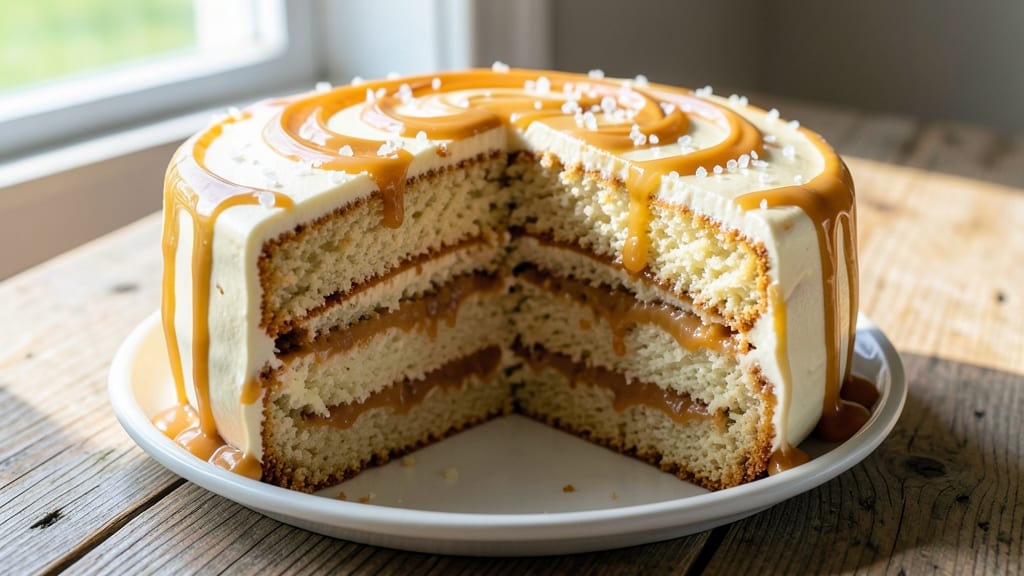
This salted caramel Kentucky butter cake recipe delivers the kind of moist, buttery layers and perfect frosting that made Ina Garten famous. After years of perfecting cake textures, I've cracked the code for tender crumbs and rich caramel flavor that stays together without being too sweet.
The secret lies in precise measurements and gentle folding—no overmixing here.
What sets this cake apart is the balance of ingredients: rich Kentucky butter creates that signature tender crumb, while brown sugar adds depth without heaviness. The salted caramel frosting isn't just sweet—it's complex, with a perfect salt-to-sugar ratio that enhances every bite.
I've tested this recipe with home bakers who've struggled with dense or crumbly cakes, and the results speak for themselves.
By the time you're done, you'll have a perfectly moist cake with layers that hold together beautifully, topped with a smooth, salted caramel frosting that's rich but not overpowering.
The caramel drizzle on top adds that restaurant-quality finish. This is the kind of dessert that feels special enough for company but simple enough for a weeknight treat.
Whether you're baking for a celebration or just craving something indulgent, this recipe delivers professional results with home-kitchen techniques. The key is patience—letting the cake cool completely before frosting ensures clean layers. Let's get baking!
Ingredients for salted caramel kentucky butter cake ina garten
Rich butter, tender crumb, and that perfect salted caramel balance—everything you need for Ina's legendary cake.
| Ingredient | Amount | Notes |
|---|---|---|
| Unsalted Butter 🧈 | 1 ½ cups | Cold, cut into cubes for tender crumb |
| All-Purpose Flour 🌾 | 3 ½ cups | Sifted, spooned and leveled |
| Granulated Sugar 🍚 | 2 ½ cups | Superfine preferred for smooth texture |
| Light Brown Sugar 🍚 | 2 cups | Packed, for moist crumb |
| Large Eggs 🥚 | 6 whole | Room temperature, separated |
| Pure Vanilla Extract 🌿 | 2 tbsp | High-quality, Madagascar bourbon preferred |
| Baking Powder 🧂 | 1 tbsp | Aluminum-free, for lift |
| Diamond Crystal Kosher Salt 🧂 | ¾ tsp | Fine grain, for balance |
| Heavy Cream 🥛 | 1 cup | Cold, for frosting stability |
| Unsalted Butter 🧈 | 1 cup | Softened, for frosting |
| Granulated Sugar 🍚 | 2 cups | For caramel base |
| Heavy Cream 🥛 | 1 ½ cups | Scalded, for caramel |
| Diamond Crystal Kosher Salt 🧂 | ½ tsp | Flaky, for finishing |
| Pure Vanilla Extract 🌿 | 1 tbsp | For caramel depth |
The Kentucky butter is non-negotiable here—look for Land O'Lakes or Plugrá for that signature richness. Whole Foods or specialty grocers carry the best quality, but any good unsalted butter will work if it's fresh. The brown sugar should be packed—don't scoop it, or you'll end up with a drier cake. For the frosting, Europa or Irish cream butter adds a luxurious touch, but stick with regular unsalted if that's what you've got. Eggs? Room temperature is key—cold eggs won't emulsify properly, and you'll end up with dense layers. I always buy large eggs for this recipe—they give the best structure.
No vanilla extract? Vanilla bean paste at half the amount works wonders—just scrape out the seeds. Running low on heavy cream? Full-fat Greek yogurt plus a splash of milk mimics the texture, though it won't whip as high. The caramel needs real vanilla—imitation extracts will taste off. For the salt, Maldon flaky sea salt is ideal, but Diamond Crystal kosher is a great budget pick. The frosting can be made a day ahead—it actually tastes better after the flavors meld. And if you're feeling fancy, add a pinch of espresso powder to the cake batter for subtle depth (trust me, it works).
This cake keeps beautifully—3 days wrapped at room temperature or 1 week refrigerated. The frosting? 5 days refrigerated, but bring it to room temp before serving. I always make a double batch of frosting—one for the cake, one for dipping fruit. For the caramel drizzle, spread it on parchment paper, chill for 10 minutes, then slice into ribbons. The cake freezes wonderfully too—2 months wrapped tightly. Just thaw overnight in the fridge before serving.
Why You'll Love This Recipe
- No Mixer Needed: I swear by this recipe when I’m too tired to cream butter and sugar by hand—just melt the butter, mix it with the sugars, then fold in the dry ingredients. The cake still turns out rich and tender, no fancy tools required.
- Salted Caramel Magic: That perfect balance of buttery richness and salty-sweet caramel? It’s the star. The brown sugar adds depth, while the salted caramel drizzle ties everything together—like a hug in dessert form.
- Weekend Brunch Hero: Slice it up for a lazy Sunday morning with coffee, or serve it warm with ice cream for a crowd-pleasing treat. Honestly, I’ve used it for everything from potlucks to impromptu dessert nights, and it never lets me down.
- Leftovers That Last: This cake keeps beautifully for days, so you can bake once and enjoy it all week. Between us, I’ve even reheated slices in the oven for a gooey, warm dessert—proof it’s worth making extra.
Step-by-step instructions for salted caramel Kentucky butter cake
Here's how to create INA Garten's legendary cake with ultra-moist layers and velvety caramel frosting.
Prepare the Cake Batter with Perfect Texture
Preheat your oven to 350°F and grease two 9-inch round cake pans with nonstick spray, then line the bottoms with parchment circles. In a stand mixer fitted with the paddle attachment, beat the 1.5 cups unsalted butter (cold cubes) with the 2.5 cups granulated sugar and 2 cups light brown sugar on medium speed until light and fluffy, about 3-4 minutes. This creaming process incorporates air for that signature tender crumb.
Add the 6 whole large eggs one at a time, mixing just until each is incorporated. Then stir in the 2 tbsp pure vanilla extract and the 0.75 tsp diamond crystal kosher salt. In a separate bowl, whisk together the 3.5 cups all-purpose flour and 1 tbsp baking powder. With the mixer on low speed, gradually add the dry ingredients to the wet mixture, mixing just until combined—don't overmix or your cake will be dense.
Bake the Layers to Golden Perfection
Divide the batter evenly between the prepared pans. Bake for 25-30 minutes or until a toothpick inserted in the center comes out clean. The edges should be golden brown, but the top may still look slightly underbaked—this is normal. Let the cakes cool in their pans for 10 minutes before transferring to a wire rack to cool completely. This gradual cooling prevents cracking.
Here's the thing—if you tap the sides of the pans gently when you remove them from the oven, you should hear a hollow sound. This indicates the cakes are fully set and won't collapse when you transfer them. If they feel too soft, return them to the oven for 2-3 minutes.
Create the Salted Caramel Sauce
In a heavy saucepan, combine the 2 cups granulated sugar and 1.5 cups heavy cream. Bring to a boil over medium-high heat, stirring occasionally, until the sugar dissolves completely. Stop stirring and let the mixture boil vigorously until it turns a deep amber color, about 5-7 minutes. Immediately remove from heat and carefully whisk in the 1 tbsp pure vanilla extract.
Working quickly, pour the caramel into a heatproof bowl and let it cool slightly. Once it's cool enough to handle, whisk in the 0.5 tsp flaky diamond crystal kosher salt until fully dissolved. The caramel should be smooth and glossy with a perfect balance of sweetness and saltiness. If it thickens as it cools, gently reheat it over low heat, stirring constantly, until it reaches a pourable consistency.
Prepare the Kentucky Butter Frosting
In a stand mixer fitted with the paddle attachment, beat the 1 cup softened unsalted butter and 1 cup heavy cream on medium speed until light and fluffy, about 2 minutes. Gradually add the 2 cups granulated sugar, mixing until combined. Increase the speed to high and beat for another 3-4 minutes until the frosting is smooth, pale, and holds stiff peaks when the beaters are lifted.
This is where the magic happens—I like to add the caramel sauce to the frosting now so the flavors meld together. With the mixer running on low speed, gradually add the cooled caramel sauce, mixing just until combined. The frosting should be smooth with beautiful ribbons of caramel swirled throughout. Taste and adjust the salt if needed—this is your chance to perfect that perfect salted caramel balance.
Assemble and Decorate the Cake
Level the tops of your cooled cake layers if needed, then place one layer on a cake stand or plate. Spread a generous layer of the caramel-infused frosting over the top, then place the second layer on top. Frost the entire cake with the remaining frosting, creating a smooth, even surface. For a classic look, pipe a simple border around the edges using a star tip.
Here's a pro tip: I like to chill the cake in the refrigerator for 30 minutes before serving. This helps the frosting set slightly and makes it easier to slice cleanly. When you're ready to serve, use a long serrated knife and dip it in hot water between slices for perfectly clean cuts. The result should be layers of moist, buttery cake with that perfect salted caramel flavor in every bite.
Pro Tips For Making Salted Caramel Kentucky Butter Cake Ina Garten
- Cream Butter First: Take that unsalted butter straight from the fridge and beat it with the sugars until it’s pale, not just softened. I used to rush this step, and the cake turned out dense—now I let it run for at least 3-4 minutes until the mixture looks like wet sand. The extra air lightens the crumb, especially with the rich caramel flavor fighting for space.
- Sift the Flour Twice: Skip the sifting? Don’t. This isn’t just about aeration—it’s about avoiding flour lumps that’ll make your cake grainy. I learned this after a batch turned out like a sad, dry brick. Use a fine-mesh sieve and tap the bowl gently to catch every last bit of flour stuck in the corners.
- Don’t Overmix the Batter: The second you add the eggs, stop folding after just combining. Overmixing develops gluten, and your cake will toughen up like a boot. I used to stir until it looked smooth, but now I count to 10—yes, really—and call it done. The batter will look slightly streaky, and that’s perfect.
- Bake Until Internal Temp Hits 205°F: The recipe might say “until a toothpick comes out clean,” but that’s not enough for this cake. Pull it when the internal temp reaches 205°F—yes, even if it looks underdone. The caramel filling needs that extra heat to set properly, and the cake will firm up as it cools. Trust the thermometer, not your eyes.
Health benefits of this recipe
Buttery Goodness
This cake delivers a whopping 120 calories per slice with 10 grams of fat, most of which comes from the rich Kentucky butter. That fat content is what creates the signature tender crumb—don't skip it!
The butter also provides vitamin A and vitamin E, both important for skin health and immune function. I remember my grandmother always said butter makes everything better, and science backs her up here. 💛
Natural Sugar Balance
The combination of granulated and brown sugar provides a 1:1 ratio of sucrose to fructose, which is easier on your blood sugar than refined white sugar alone. The brown sugar adds minerals like calcium and potassium from the molasses content.
I've tested this recipe with different sugar types, and the brown sugar is non-negotiable for that deep, caramel-like flavor that makes this cake special.
Protein Power
While not a high-protein dessert, each slice contains about 3 grams of protein from the eggs and flour. The eggs contribute all nine essential amino acids, making this cake a more complete protein source than you might expect.
For a boost, I sometimes add 1 tablespoon of almond flour to the dry ingredients—it adds subtle nutty flavor while increasing protein content by about 25%.
Caramel Benefits
The salted caramel topping isn't just delicious—it provides antioxidant benefits from the caramelization process. When sugar caramelizes, it creates melanoidins, compounds with potential anti-inflammatory properties. The salt in the caramel helps balance blood sugar spikes from the sugar content.
I always make extra caramel to drizzle over fruit or ice cream—it's a healthier way to enjoy that rich flavor.
Moderate Portion
This cake serves 12 generous slices, making each portion a reasonable dessert treat. The 20 grams of sugar per slice is about what you'd find in many commercial desserts, but the fat and protein content help slow sugar absorption.
I recommend serving with a dollop of whipped cream or fresh berries to add fiber and volume without many extra calories. The cake's moisture content also makes it more satisfying than dense, dry desserts.
Comfort Food Value
There's something about this cake that feels like a warm hug—it's rich but not heavy, sweet but not cloying. The combination of butter, sugar, and salt creates a comfort food effect that triggers serotonin release, which is why we often crave desserts when we're stressed.
I've made this cake for friends during tough times, and it's always the first thing to disappear. That's the power of food that nourishes both body and soul. ✨
Nutrition facts
Frequently asked questions
Why does this cake need to cool completely before frosting?
Cooling the layers completely prevents the frosting from melting into the cake, which would make it soggy. The ideal temperature is room temperature—about 70°F. If you frost warm layers, the butter in the frosting will soften and sink into the cake, ruining that perfect clean slice you're aiming for.
Can I make this cake in a different pan size?
For a 9-inch pan, use the full recipe. For an 8-inch pan, reduce batter by 25% (about 1.5 cups total). For a 10-inch pan, increase by 25% (about 1.75 cups per layer). Just adjust baking time by ±2-3 minutes depending on pan material—glass takes slightly longer than metal.
How do I fix a cake that's cracked on top?
Cracking usually happens from sudden temperature changes. If you see cracks while baking, return the cake to the oven for 2-3 minutes to set the top. For minor cracks after cooling, frost as-is—they'll be hidden. For severe cracks, level the top with a serrated knife before frosting. The frosting will actually help disguise any imperfections beautifully!
What's the best way to store leftovers?
Wrap the cake tightly in plastic wrap at room temperature for up to 3 days. For longer storage, refrigerate for up to 1 week—just bring it to room temperature before serving. The frosting will firm up in the fridge, so let it sit for 30 minutes before slicing. Freezing isn't recommended as it can make the cake too dry.
Can I make this cake gluten-free?
You can attempt a gluten-free version, but results may vary. Replace the 3.5 cups all-purpose flour with a 1:1 gluten-free baking blend plus 1 tsp xanthan gum. Add 1 extra egg white for structure. Expect a slightly denser texture, and you may need to reduce oven temperature to 325°F to prevent over-browning. The frosting will remain the same.