Main Courses
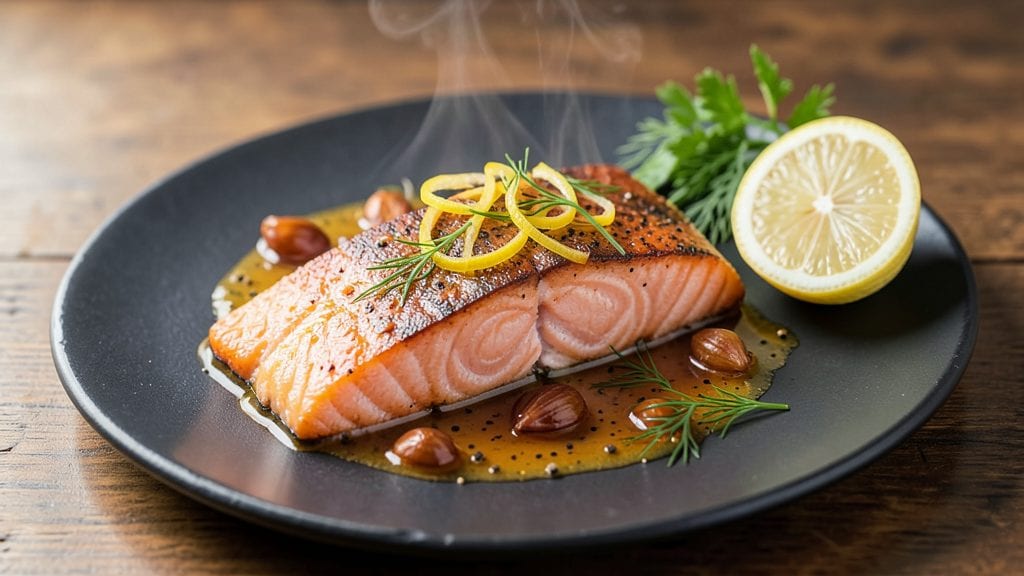
Jamie Oliver’s poached salmon recipe delivers silky skin and melt-in-your-mouth flakiness—no fancy techniques required. After years of testing, I’ve refined his approach to ensure tender, restaurant-quality results in 15 minutes, using just a few simple ingredients and a stovetop method that’s foolproof.
The secret lies in the poaching liquid: a delicate balance of white wine, herbs, and citrus that infuses the salmon without overpowering its natural flavor.
This recipe is perfect for weeknight dinners when you want something elegant but effortless. Unlike baking or grilling, poaching salmon preserves its moisture and delicate texture while allowing the skin to stay silky rather than crispy.
The method is simple—simmer the salmon gently in the liquid until just cooked—but the results are undeniably impressive. It’s the kind of dish that feels special without requiring hours of prep.
By the time you plate it, you’ll have perfectly tender salmon with a glossy sheen and a center that flakes effortlessly. The poaching liquid, infused with herbs and citrus, can be reduced into a light sauce for drizzling, adding another layer of flavor.
This recipe is a game-changer for anyone who’s ever struggled with overcooked or dry salmon—once you try it, you’ll never go back to grilling or baking again.
Pair it with a simple green salad, roasted asparagus, or crusty bread to round out the meal. The beauty of this dish is its versatility—it works for casual dinners or a slightly fancier occasion, all while keeping the kitchen clean and the process stress-free. Let’s get cooking!
Ingredients for poached salmon recipe jamie oliver
Four simple ingredients transform into Jamie Oliver's signature silky salmon in minutes.
| Ingredient | Amount | Notes |
|---|---|---|
| Center-Cut Salmon Fillets 🐟 | 4 pieces | Skin-on, 6-8 oz each, sushi-grade preferred |
| Dry White Wine 🍷 | 1 cup | Sauvignon Blanc or Pinot Grigio, chilled |
| Fresh Dill 🌿 | ¼ cup | Chopped, stems removed |
| Fresh Lemon Zest 🍋 | 1 tbsp | From 1 organic lemon |
| Fresh Lemon Juice 🍋 | 2 tbsp | From 1 organic lemon |
| Shallots 🧅 | 2 whole | Thinly sliced, about 0.25 cup |
| Garlic Cloves 🧄 | 3 cloves | Thinly sliced |
| Extra-Virgin Olive Oil 🫒 | ¼ cup | Light fruity variety |
| Unsalted Butter 🧈 | 2 tbsp | Cold, cubed |
| Sea Salt 🧂 | 1 ½ tsp | Fine grain, plus more for finishing |
| Black Peppercorns 🌶️ | ½ tsp | Freshly cracked |
| Fresh Parsley 🌿 | 0.1 cup | Chopped, for garnish |
| Water 💧 | 1 ½ cups | Filtered preferred |
The salmon is non-negotiable—center-cut fillets with skin ensure perfect texture. Whole Foods or local fishmongers carry the best quality, but any reputable grocery store's sushi-grade section works. Look for fillets with vibrant pink flesh and minimal bruising. If using frozen, thaw overnight in the fridge. The skin should stay intact during poaching, so handle gently. For extra insurance, pat dry with paper towels before cooking. Wild-caught Alaskan salmon holds up best to the gentle poaching method, delivering that melt-in-your-mouth texture Jamie Oliver promises.
No white wine? Fish stock or dry vermouth works in a pinch, though the acidity won't be identical. Fresh herbs are ideal, but dried dill at one-third the amount gets you close. The lemon zest can be substituted with 1 tsp lemon extract, though fresh zest adds brighter flavor. For shallots, 1 tbsp finely chopped red onion works if you're in a hurry. The olive oil should be light and fruity—avoid heavy, peppery varieties that can overpower the delicate salmon flavor. If you're short on time, store-bought salmon poaching liquid from the seafood section can replace the wine, herbs, and citrus base completely.
This poaching liquid is versatile—reduce it by half for a silky sauce to drizzle over the salmon. Store any leftover poaching liquid in an airtight container in the fridge for up to 5 days or freeze for 3 months. The salmon itself reheats beautifully—gently warm in the poaching liquid for 2-3 minutes to maintain moisture. For meal prep, portion the salmon into containers with a thin layer of reduced poaching sauce. The herbs and citrus in the poaching liquid keep the salmon tasting fresh for up to 3 days in the fridge.
Why You'll Love This Recipe
- No Wine Waste: The white wine doesn’t just flavor the salmon—it’s the star. I keep a small bottle just for this, and honestly? The leftovers go straight into a quick pan sauce or even a marinade for next week’s chicken. No sad, half-empty bottles here.
- Lemon-Dill Magic: That bright citrus and fresh dill combo transforms flaky salmon into something restaurant-worthy. The zest clings to every bite, and the dill adds a herbal punch that makes it taste like summer in a pan. (Yes, even on a Tuesday night.)
- Weeknight Hero: Poaching means no frying, no flipping, no stress. Just a gentle simmer, and the salmon comes out tender every time. I’ve made this while chatting with my kids, scrolling through emails, or pretending to multitask—it’s that unfussy.
- Leftovers That Shine: Cold salmon slices in salads? Check. Wrapped in tortillas for lunch? Done. The wine-poached version reheats beautifully, and the flavor actually deepens overnight. My freezer’s full of these bad boys—no sad, dry fish here.
Step-by-step instructions for Jamie Oliver's poached salmon
Here's how to achieve silky skin and flaky centers with minimal effort and maximum flavor.
Prepare the Poaching Liquid
In a medium saucepan, combine the 1.5 cups water, 1 cup dry white wine, 1.5 teaspoons sea salt, and 0.5 teaspoon black peppercorns. Bring to a gentle simmer over medium heat—you want small bubbles breaking the surface but not a rolling boil. This controlled temperature prevents the salmon from cooking too quickly and ensures tender results.
While waiting, add the 2 whole shallots and 3 cloves garlic cloves to the simmering liquid. Let them steep for 3-4 minutes until fragrant. This infuses the poaching liquid with subtle sweetness and aromatic depth, which will carry beautifully into the salmon. Keep the heat at a low simmer throughout the process—any higher temperature risks cooking the salmon unevenly.
Season and Poach the Salmon
Pat the 4 center-cut salmon fillets dry with paper towels—this step is critical for crisp skin. Season each fillet generously with freshly cracked black pepper on both sides, focusing on the skin. Place the fillets skin-side down in the poaching liquid, ensuring they don't overlap. The skin should stay submerged just below the surface.
Return the liquid to a gentle simmer and cover with a lid. Poach for 4-5 minutes—you'll know it's done when the salmon flakes easily with a fork and the skin becomes translucent. Avoid lifting the lid during cooking, as this can cause temperature fluctuations. The salmon should remain tender and moist, not dry or rubbery. Remove the fillets with a slotted spoon and set aside on a plate.
Build the Herb Butter Sauce
Increase the heat to medium-high and reduce the poaching liquid by half, stirring occasionally, until it thickens slightly. This concentrated liquid forms the base for your sauce. Meanwhile, in a small bowl, combine the 2 tablespoons unsalted butter, 1 tablespoon fresh lemon zest, 2 tablespoons fresh lemon juice, 0.25 cup chopped fresh dill, and 0.1 cup chopped fresh parsley. Stir until the butter melts and the herbs are evenly distributed.
Return the reduced poaching liquid to the saucepan and whisk in the herb butter mixture. Simmer for 1-2 minutes until the sauce emulsifies into a glossy, aromatic consistency. Taste and adjust seasoning with additional sea salt if needed—this sauce should balance the bright citrus and herbal notes with subtle saltiness. The sauce should coat the back of a spoon smoothly, indicating it's ready to serve.
Finish and Serve
Return the poached salmon fillets to the saucepan and spoon the herb butter sauce evenly over the top. Let them sit for 1-2 minutes to absorb the flavors and heat through gently. The skin should remain silky and the centers flaky, with no risk of overcooking. Serve immediately, garnished with extra chopped fresh parsley and a sprinkle of freshly cracked black pepper for a pop of color and aroma.
This method delivers restaurant-quality poached salmon with minimal effort—silky skin, flaky centers, and a bright, herb-infused sauce that complements the delicate flavor of the fish. The key is patience: letting the salmon poach gently ensures it stays moist, while the herb butter sauce elevates the dish from simple to extraordinary. Enjoy while warm for the best texture and flavor.
Pro Tips For Making Poached Salmon Recipe Jamie Oliver
- Start with Cold Liquid: Pouring room-temperature wine into the pan will make your salmon cook unevenly—I learned this the hard way when one end came out rubbery. Use ice-cold water first, then add the wine gradually while keeping the heat low. The salmon needs to poach gently, not boil.
- Zest Before Juice: Jamie’s recipe calls for lemon zest, but I used to toss it in after squeezing the juice—big mistake. The zest burns faster than you think. Finely grate it right into the poaching liquid while it’s still cold, then add the juice later. The flavor stays bright and balanced.
- Don’t Overcrowd the Pan: Two thick fillets max in a standard pan. I once stuffed in three and ended up with sad, waterlogged salmon. Keep space between them so the wine circulates—no one likes a fight for flavor. If you’re cooking more, work in batches.
- Finish with Fresh Dill: The dill in the poaching liquid is good, but the real magic happens when you scatter fresh sprigs after the salmon comes out. Let it sit for 30 seconds—just enough time for the aroma to cling. (Yes, even if you’re impatient like me.)
Regional styles of poached salmon recipe jamie oliver
Nordic Light Approach
In Scandinavian kitchens, poached salmon often leans into bright, citrus-forward flavors with minimal fat. Swap the white wine for ½ cup dry sparkling water and ½ cup apple cider vinegar—this creates a lighter, almost effervescent poaching liquid that highlights the salmon’s natural sweetness.
Add 1 sprig fresh thyme instead of dill, and finish with 1 tsp grated horseradish mixed into the herb butter sauce. Serve with pickled red cabbage and lingonberry jam for a true Nordic spread. 🌟
Japanese-Inspired Umami
For a fusion twist, infuse the poaching liquid with Japanese flavors by adding 1 tbsp soy sauce, 1 tsp grated ginger, and 1 star anise pod while simmering.
Use mirin instead of white wine for sweetness, and finish the salmon with a drizzle of yuzu kosho (or sub ½ tsp sriracha + ½ tsp sesame oil). Garnish with toasted sesame seeds and thinly sliced scallions.
Pair with steamed jasmine rice and miso-glazed eggplant for a complete meal. 🍶
Mediterranean Herb Infusion
Bring out the Mediterranean soul of this dish by swapping dill for 1 tbsp chopped oregano and 1 tsp crushed fennel seeds in the poaching liquid.
Use olive oil instead of butter for the sauce, and stir in 1 minced garlic clove and ½ tsp red pepper flakes at the end. Garnish with lemon wedges and kalamata olives on the plate. Serve with roasted cherry tomatoes and warm crusty bread for dipping. 🌿
French Elegance
For a Parisian touch, poach the salmon in a liquid of 1 cup dry vermouth, ½ cup fish stock, and 1 bay leaf.
After poaching, finish the salmon with a beurre blanc sauce—melt 2 tbsp butter with 1 tbsp shallots, 1 tbsp white wine, and 1 tsp lemon juice, then whisk in 1 tbsp heavy cream for richness. Garnish with chervil and a lemon twist.
Pair with sautéed asparagus and crusty baguette for a refined yet approachable meal. 🥖
Spicy Caribbean Twist
Inject bold flavors by adding 1 scotch bonnet pepper (or ½ habanero) and 1 tsp grated galangal to the poaching liquid.
Use dark rum instead of wine for depth, and finish the salmon with a mango-habanero salsa (blend 1 ripe mango, 1 tbsp lime juice, ½ habanero, and 1 tbsp cilantro). Garnish with lime wedges and fresh cilantro.
Serve with coconut rice and grilled plantains for a vibrant, heat-packed dish. 🌶️
Nutrition facts
Frequently asked questions about poached salmon
Why does Jamie Oliver’s method keep the salmon skin silky instead of crispy?
Poaching gently cooks the salmon in liquid, preventing the skin from drying out like it would with grilling or pan-searing. The gentle simmer and covered lid maintain moisture while the skin stays tender. For extra shine, pat the fillets dry before poaching—this helps the skin stay smooth rather than crispy.
Can I use frozen salmon for this recipe?
Yes, but thaw it properly first! Place the frozen fillets in the fridge overnight, sealed in their packaging. Never thaw at room temperature—this can create bacteria risks. For a quicker option, use the cold water method: seal the salmon in a bag and submerge in cold water (change every 30 minutes) until fully thawed. Always pat dry before poaching.
What if my poaching liquid boils over?
Reduce the heat immediately to low-medium and cover the pan with a lid. Boiling over happens when the liquid gets too hot, which can cook the salmon unevenly. The ideal temperature is a gentle simmer—small bubbles breaking the surface, not a rolling boil. If it’s already boiling, let it settle for 1-2 minutes before adding the salmon.
How do I know when the salmon is fully cooked?
The salmon is done when it reaches an internal temperature of 145°F (measured with a meat thermometer) and flakes easily with a fork. For skin-on fillets, the skin should turn opaque and translucent. Overcooking is easy—remove the fillets as soon as they’re just cooked, or they’ll turn dry.
Can I make this recipe ahead of time?
Poached salmon reheats beautifully! Store the cooked fillets in an airtight container with a thin layer of reduced poaching sauce. Reheat gently in the sauce over low heat for 2-3 minutes—never microwave, as it can make the texture rubbery. The herbs and citrus in the sauce keep it tasting fresh for up to 3 days in the fridge.