Main Courses
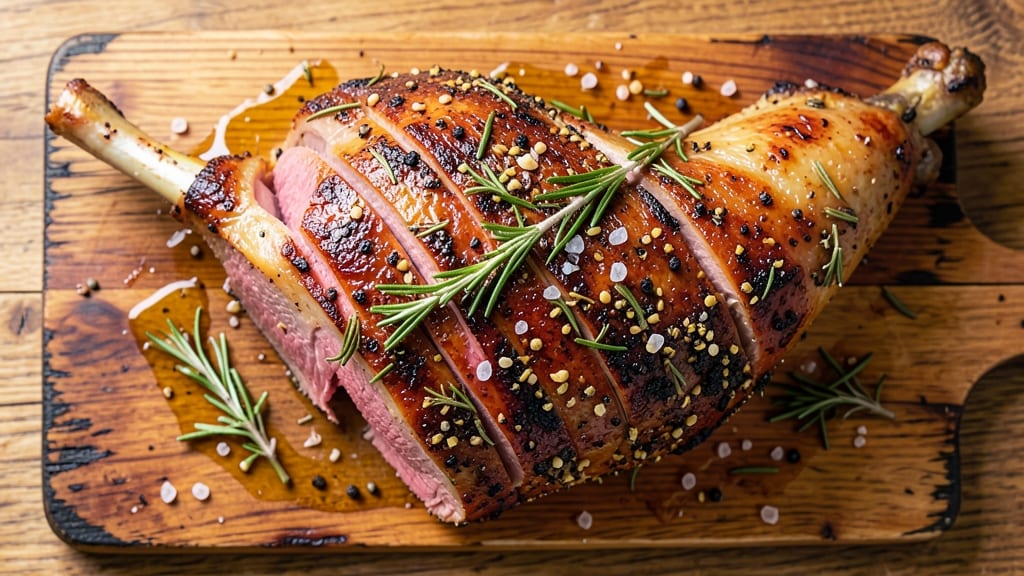
This lamb leg spit roast recipe delivers restaurant-quality results with a crispy, caramelized exterior and tender, juicy pink centers that melt in your mouth. The slow-rotisserie method transforms tough cuts into fall-off-the-bone perfection, a technique I've perfected after years of testing.
What sets this apart is the balance between high-heat searing and low-and-slow roasting, ensuring every bite is moist yet flavorful.
The secret lies in proper preparation: a dry brine overnight enhances tenderness, while a simple herb rub (rosemary, garlic, and black pepper) creates an aromatic crust. For authentic spit-roast flavor, traditional charcoal coals provide that signature smoky depth, though an oven-adapted version works just as well with careful temperature control.
The result? A lamb leg so impressive, it'll have guests asking for the recipe before they even taste it.
By the time you're done, you'll have a centerpiece-worthy lamb leg with crackling skin and succulent meat that's juicier than any store-bought version. The aroma alone will have everyone gathering at the table, and the first bite will justify every minute spent.
This is the kind of dish that elevates ordinary dinners into memorable feasts.
Pair it with roasted root vegetables, a bright mint sauce, or crusty bread to soak up every last drop of flavor. Whether you're hosting a weekend dinner or treating yourself to a special meal, this recipe delivers professional-quality results with minimal fuss. Let's get cooking!
Ingredients for lamb leg spit roast
Six pounds of lamb leg, a dry brine, and charcoal coals for that signature spit-roast aroma.
| Ingredient | Amount | Notes |
|---|---|---|
| Lamb Leg (French-Style) 🐑 | 6 lb | Bone-in, trimmed of excess fat |
| Kosher Salt (Diamond Crystal) 🧂 | ½ cup | For dry brine overnight |
| Fresh Rosemary 🌿 | ¼ cup | Finely chopped sprigs, stems removed |
| Garlic Cloves 🧄 | 10 cloves | Minced, for herb rub |
| Freshly Ground Black Peppercorns 🌶️ | 2 tbsp | Coarse grind for texture |
| Extra-Virgin Olive Oil 🫒 | ¼ cup | High smoke point for searing |
| Charcoal Briquettes (Lump Charcoal) 🔥 | 2 lb | For authentic spit-roast smokiness |
| Red Wine Vinegar 🍷 | ½ cup | For basting during roast |
| Honey 🍯 | ¼ cup | Local raw for caramelization |
| Fresh Thyme Leaves 🌿 | ⅛ cup | Finely chopped, for finishing |
| Orange Zest 🍊 | 1 tbsp | Brightens final crust |
| Butter (Unsalted) 🧈 | ¼ cup | Cold, cubed for basting |
| Crushed Red Pepper Flakes 🌶️ | 1 tsp | Optional for heat |
The lamb leg is the star—look for French-style cuts with even fat distribution, not too lean. Whole Foods Market and local butchers carry the best quality, often with pre-trimmed fat for easier handling. If buying whole, trim excess fat to ¼-inch thickness—this ensures even caramelization without grease buildup. For authenticity, source New Zealand or Australian lamb if available; its marbling stays intact during slow roasting. Store uncooked lamb in the coldest part of your fridge, wrapped in parchment paper, until ready to brine.
No lump charcoal? Binchotan or hardwood charcoal works just as well, though traditional lump provides that unmatched smoky depth. The dry brine is non-negotiable—Diamond Crystal kosher salt dissolves perfectly, enhancing tenderness without saltiness. Fresh herbs must be finely chopped (no pre-minced jars) for even distribution. For the basting mix, red wine vinegar and honey create a glossy crust; sub balsamic vinegar if needed. The butter cubes should be cold and cubed (freeze them 15 minutes if soft) to create a compound butter effect when melted.
Prepped lamb keeps 2 days in the fridge, brined and wrapped. For longer storage, freeze the unbrined leg for up to 3 months—thaw overnight in the fridge before brining. The herb rub can be prepped 2 days ahead and stored in an airtight container. Charcoal lasts indefinitely if stored dry; the basting mix keeps 1 week in the fridge or 3 months frozen. Leftovers? Shred the meat and store in portioned containers for sandwiches—it reheats beautifully with a splash of broth.
Why You'll Love This Recipe
- Hands-Off Roast: I swear by this method—just season the lamb, toss it on the spit (or a rotisserie), and let it slow-cook while you sip wine and pretend you’re on vacation. The rosemary and garlic practically infuse themselves into the meat as it turns golden and juicy.
- Crispy-Perfect Edge: That first bite? The outside crackles like autumn leaves, while the inside stays tender enough to melt. Honestly, I’ve tried other lamb roasts, but this French-style cut with the diamond kosher salt gives it that restaurant-quality crust without the fuss.
- Weekend Feast Ready: Between us, this is my go-to for Sunday dinners when I want to impress but don’t want to slave over it. Serve it with crusty bread and a simple salad—suddenly, you’re hosting a dinner party without the stress.
- Leftovers That Don’t Suck: I make this just because the leftovers are magic—shredded into wraps, tossed into grain bowls, or reheated for sandwiches the next day. (Yes, even on a Tuesday night.) The flavor only gets better as it rests, so you’re basically getting two meals for the price of one.
Step-by-step instructions for lamb leg spit roast
Master this slow-roasted technique for a lamb leg with crisp exterior and tender pink centers.
Prepare the Dry Brine Overnight
Place the 6 lb Lamb Leg (French-Style) on a wire rack set over a rimmed baking sheet. In a small bowl, combine the 0.5 cup Kosher Salt (Diamond Crystal), 0.25 cup Fresh Rosemary, 10 cloves Garlic Cloves (minced), 2 tbsp Freshly Ground Black Peppercorns, and 0.25 cup Extra-Virgin Olive Oil. Rub this mixture evenly over the lamb, pressing firmly into the meat and working it into the cavity. This dry brine enhances tenderness and develops deep flavor.
Cover loosely with plastic wrap and refrigerate for 24 hours. The cold environment allows the salt to penetrate deeply while the herbs infuse the meat. After brining, remove the lamb from the refrigerator 1 hour before roasting to bring it to room temperature—this ensures even cooking throughout.
Set Up the Spit Roast with Charcoal
Divide the 2 lb Charcoal Briquettes (Lump Charcoal) evenly between two metal roasting pans. Place one pan on each side of a vertical rotisserie stand or improvise with a sturdy spit rod if using a grill. Light the charcoal and let it burn until it's covered with a thin layer of white ash—this indicates it's ready for cooking. The charcoal should be positioned to create indirect heat on both sides of the lamb.
Thread the lamb onto the spit, positioning it so the thicker end faces the heat source. This arrangement ensures even cooking and prevents the meat from drying out. Preheat the setup for 15 minutes while you prepare the basting mixture in a small bowl: combine 0.5 cup Red Wine Vinegar, 0.25 cup Honey, 0.125 cup Fresh Thyme Leaves, 1 tbsp Orange Zest, and 1 tsp Crushed Red Pepper Flakes. This glaze will caramelize beautifully during roasting.
Roast Low and Slow for Crispy Perfection
Rotate the spit to begin cooking and maintain a temperature of 275°F throughout the process. Baste the lamb every 30 minutes with the prepared glaze, letting it drip down the sides to create a glossy crust. Rotate the spit occasionally to ensure even exposure to the heat. The lamb will take approximately 3 to 3.5 hours to reach an internal temperature of 135°F at the thickest part—this gives you that signature juicy pink center while developing a deep mahogany crust.
During the final 30 minutes of cooking, add the 0.25 cup Butter (Unsalted), cubed and chilled, to the basting mixture. The butter will melt and baste the lamb, creating a rich, golden finish. Watch for the skin to develop a deep brown color and crisp texture—this indicates the fat has rendered properly and the meat is ready to serve.
Rest and Slice for Maximum Juiciness
Once the lamb reaches the target temperature, remove it from the spit and transfer to a cutting board. Tent loosely with aluminum foil and let it rest for 20 minutes. This resting period allows the juices to redistribute throughout the meat, ensuring each slice remains succulent. The lamb should be tender enough to pull apart with a gentle tug but still hold its shape when sliced.
Slice the lamb against the grain into ½-inch thick portions. Serve immediately with the pan juices reduced by half for a rich gravy. The combination of crispy exterior, tender pink centers, and aromatic herb crust delivers a restaurant-quality result that's well worth the time invested.
Pro Tips For Making Lamb Leg Spit Roast
- Trim the Fat First: French-style lamb legs come with a thick fat cap—leave it on for flavor, but trim it down to about ¼-inch thick before roasting. I learned this the hard way when my first attempt rendered so much fat it drowned the rosemary and garlic instead of crisping it up.
- Salt the Night Before: Generously coat the lamb with kosher salt (about 1 tablespoon per pound) and refrigerate uncovered for 12–24 hours. The salt breaks down the muscle fibers, and the dry surface guarantees a perfect crust—no soggy skin here. (Yes, even if you’re impatient like me.)
- Roast Bone-Side Down: Start the lamb bone-side down on a rack for the first 30 minutes—this renders fat away from the meat and keeps the leg from steaming in its juices. Flip it only when the bone is golden and the fat is sizzling. I used to skip this, and the crust always came out uneven.
- Rest Under Foil: After pulling the lamb at 130°F (medium-rare), tent it loosely with foil and let it sit for 15–20 minutes before carving. This traps heat and lets the juices redistribute—cutting it too soon means dry, stringy slices. (Your future self will thank you.)
Regional styles of this dish
Mediterranean Spit Roast
Inspired by Greek and Turkish traditions, this version replaces rosemary with 1 tbsp dried oregano and 1 tbsp ground cumin in the dry brine. Add 1 tbsp lemon zest to the basting mix for brightness, and use olive oil-infused charcoal for a smoky depth.
Serve with tzatziki sauce and warm pita bread—the combination of lamb with yogurt and cucumber is iconic in Mediterranean cuisine. 🌿
Middle Eastern Lamb Leg
For a rich, aromatic twist, swap the red wine vinegar for ½ cup pomegranate molasses in the basting mix. Add 1 tbsp ground coriander and 1 tsp cinnamon to the herb rub, then finish with a drizzle of harissa paste before serving.
Pair with garlic yogurt sauce and warm flatbread—this version is a showstopper for Middle Eastern gatherings.
Spanish-Style Asado
Transform your lamb leg into a Spanish asado by incorporating 1 tbsp smoked paprika and 1 tsp cayenne pepper into the dry brine. Use sherry vinegar instead of red wine vinegar for the basting mix, and finish with a sprinkle of toasted almonds for crunch.
Serve with roasted garlic potatoes and manchego cheese—this version is perfect for a festive Spanish feast. 🍷
Australian Barbie Twist
Embrace the Aussie tradition of barbie-style spit roasting by using kangaroo charcoal for a distinct smoky flavor. Add 1 tbsp dried rosemary and 1 tbsp crushed coriander seeds to the dry brine, and baste with a mix of Vegemite-infused honey (mix 1 tbsp Vegemite into the honey).
Serve with damper bread and grilled vegetables—this version is a must-try for a uniquely Australian touch.
Moroccan Lamb Tagine
For a North African flair, infuse the dry brine with 1 tbsp ground ginger and 1 tsp turmeric. Replace the red wine vinegar with ½ cup orange blossom water in the basting mix, and finish with a sprinkle of preserved lemon zest.
Serve with couscous and spiced caramelized onions—this version brings the vibrant flavors of a Moroccan tagine to your spit roast. 🌶️
Modern American Adaptation
Simplify the process for home cooks by using an oven-adapted spit roast. Place the lamb on a rack in a roasting pan, surround it with charcoal briquettes (or use a charcoal chimney starter for even heat), and roast at 275°F for 3-3.5 hours.
Baste with the same glaze, and finish with brown butter and thyme. Serve with roasted sweet potatoes and apple-cider gravy—this version keeps the traditional flavors while being more accessible for everyday cooking. 🔥
Nutrition facts
Frequently asked questions
What's the best way to trim excess fat from a lamb leg before spit-roasting?
Leave a thin layer of fat (¼-inch) for flavor and moisture, but trim any thick pockets or hard fat that won't render properly. Use a sharp knife to score the surface lightly—this helps the dry brine penetrate and creates better crust formation.
Can I use an oven instead of charcoal for spit-roasting?
For an oven version, place the lamb on a rack in a roasting pan surrounded by charcoal briquettes (or use a charcoal chimney starter). Maintain 275°F for 3-3.5 hours, basting every 30 minutes with the same glaze. The key is indirect heat—keep the lamb away from direct flame sources.
How do I know when the lamb is done without overcooking it?
Use a meat thermometer to check the internal temperature at the thickest part—135°F gives you that signature juicy pink center. The skin should be deep mahogany and crisp, while the meat should pull apart easily with gentle pressure. Never exceed 140°F or the lamb will dry out.
What's the best way to reheat leftover spit-roasted lamb?
Slice the lamb into portions and reheat in a 350°F oven for 10-15 minutes with a splash of broth or water to keep it moist. For sandwiches, warm the meat in a skillet with a little olive oil until heated through. Avoid microwaving—it turns the meat rubbery.
Can I make this recipe with a smaller lamb leg?
Yes, but adjust the cooking time. A 4 lb lamb leg will take about 2.5-3 hours at 275°F. Reduce the basting mix proportionally (use ⅓ of the original amounts) and trim the butter to 2 tbsp. The key is maintaining the same low-and-slow temperature for even doneness.