Side Dishes
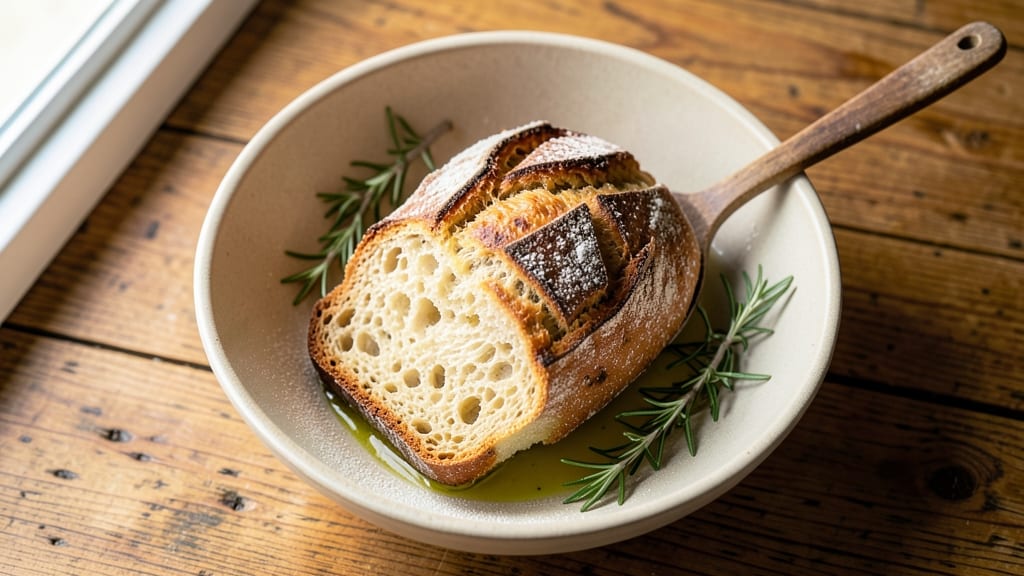
Mastering King Arthur Flour no-knead bread transforms home baking from a chore to a reliable, restaurant-quality achievement—no kneading required. This recipe leverages the brand’s high-gluten flour to create a foolproof rise and Dutch oven crust that delivers artisanal texture without the effort.
I’ve baked hundreds of loaves using this method, and the secret lies in precise yeast activation, hydration balance, and patience during proofing.
The beauty of this approach is its adaptability: whether you’re a beginner or a seasoned baker, the technique delivers consistent results. King Arthur’s flour handles higher hydration ratios beautifully, producing a tender crumb and crispy crust that rivals store-bought sourdough.
The Dutch oven traps steam, mimicking a professional bakery’s environment right in your kitchen—no special equipment beyond a heavy pot.
What you’ll achieve is a loaf with an open, airy crumb and a golden, crackly crust that’s impossible to resist. The dough requires just 10 minutes of prep and 12–18 hours of proofing, making it ideal for overnight baking.
Perfect for sandwiches, toast, or gifting, this bread stays fresh for days when stored properly.
For customization, try adding whole grains, seeds, or herbs to the dough before shaping—just adjust hydration slightly if needed. The recipe includes troubleshooting tips for common issues like dense crumb or underproofing, ensuring your first loaf (and every one after) turns out flawlessly.
Ingredients for king arthur flour no knead bread
Four cups of King Arthur's high-gluten flour kickstarts this restaurant-worthy loaf with minimal effort.
| Ingredient | Amount | Notes |
|---|---|---|
| King Arthur Flour (Bread Flour) 🌾 | 4 cups | High-gluten for optimal rise |
| Active Dry Yeast 🍞 | ¼ tsp | Freshly opened for best activation |
| Granulated Sugar 🍚 | ½ tsp | Feeds yeast for fermentation |
| Diamond Crystal Kosher Salt 🧂 | 1 ½ tsp | Fine grain for even distribution |
| Extra-Virgin Olive Oil 🫒 | 1 tbsp | High-quality for flavor infusion |
| Warm Water 💧 | 2 ½ cups | 105°F for optimal yeast activation |
| Cornmeal 🌽 | ¼ cup | For dusting Dutch oven |
| Coarse Sea Salt (for topping) 🧂 | ½ tsp | Flaky texture preferred |
| Optional Whole Grain Add-Ins 🌾 | ½ cup | Oats, seeds, or herbs |
King Arthur's bread flour is non-negotiable here—its 12.7% protein content ensures the perfect balance of structure and tenderness. Purchase the 5-pound bag from their website or your local bakery supply store for consistent results; grocery store bread flours often lack the gluten strength. The yeast must be active dry, not instant, as this recipe relies on traditional activation. For storage, keep flour in an airtight container in a cool, dark place—it stays potent for up to 6 months. The olive oil should be extra-virgin to contribute subtle fruity notes that elevate the crust.
No active dry yeast? Instant yeast works at half the amount, but adjust hydration slightly by reducing water by 1 tbsp. Substituting sugar with honey (equal parts) adds depth but may darken the crust. For the optional add-ins, toasted oats or sesame seeds work beautifully, while fresh rosemary or thyme infuse herbal complexity. The water temperature is critical—105°F activates yeast without killing it. Too hot? Use a thermometer; too cold? Warm it gently. If you're baking at high altitude, increase flour by 1-2 tbsp to compensate for reduced atmospheric pressure.
This dough requires 12–18 hours of proofing, so plan ahead. Store shaped loaves in the fridge overnight for enhanced flavor development. For long-term storage, freeze fully baked loaves wrapped in plastic for up to 3 months. To revive, thaw at room temperature and reheat in a 350°F oven for 5 minutes to restore crispness. The Dutch oven is essential—its cast iron retains heat and creates that coveted crusty exterior. If you don’t own one, a heavy oven-safe pot with a lid works in a pinch, though results may vary slightly.
Why You'll Love This Recipe
- No-Knead Magic: Honestly, mixing the dough takes less time than waiting for my coffee to brew. Just toss the King Arthur flour, yeast, sugar, and olive oil—no punching, no rolling—then let it rise while you do anything else.
- Crispy-Chewy Gold: That crust? Perfectly crackly thanks to the kosher salt and olive oil, while the interior stays soft and pillowy. I’ll take that over dry, sad sandwich bread any day.
- Weeknight Wonder: Between us, this is my go-to for quick lunches, charcuterie boards, or even toast in the morning. The dough keeps for days in the fridge, so I bake a batch and forget it.
- Budget-Friendly Staple: A single batch feeds my family for days—sandwiches, toast, or even croutons—and costs pennies per serving. That’s real value, especially when you’re using pantry basics like yeast and sugar.
Step-by-step instructions for no-knead bread with King Arthur flour
Master this method for artisanal-quality bread with minimal effort and maximum flavor development.
Activate the Yeast and Mix the Dough
In a large mixing bowl, combine the 2.5 cups warm water (tested at 105°F with a thermometer) with the 0.5 tsp granulated sugar and 0.25 tsp active dry yeast. Let this mixture sit for 5-10 minutes until it becomes frothy and bubbly—this confirms the yeast is active. If no bubbles form, your yeast may be stale or the water too hot.
Once activated, add the 4 cups King Arthur Flour (Bread Flour), 1.5 tsp diamond crystal kosher salt, and 1 tbsp extra-virgin olive oil to the bowl. Using a wooden spoon or silicone spatula, stir vigorously for 2 minutes until a shaggy dough forms. The dough will be sticky and wet—this is normal for no-knead bread. If using 0.5 cup optional whole grain add-ins, fold them in now. Cover the bowl with plastic wrap and let rest at room temperature for 12-18 hours.
Shape the Dough and Prepare the Dutch Oven
After the initial rise, the dough will have nearly doubled in size and will be bubbly. Lightly flour a clean surface and gently turn out the dough. Shape it into a round loaf by folding the edges toward the center, then rolling it into a smooth ball. This shaping step develops gluten structure without kneading.
Preheat your oven to 450°F with the Dutch oven inside for 30 minutes. While the oven heats, lightly dust the inside of the Dutch oven with 0.25 cup cornmeal, tapping out any excess. This prevents sticking and creates a crispy crust. The cornmeal also adds subtle sweetness to the bread's exterior.
Bake for a Crispy Crust and Even Rise
Carefully transfer the shaped dough to the hot Dutch oven using a well-floured towel or parchment paper. Cover the Dutch oven with its lid and bake for 30 minutes. After 30 minutes, remove the lid and continue baking for another 10-15 minutes until the bread is deep golden brown and sounds hollow when tapped on the bottom.
Here's the key: the bread should reach an internal temperature of 190-200°F at its center. Use an instant-read thermometer to verify—this ensures proper doneness without overbaking. The crust should be crisp and slightly blistered, with a beautiful mahogany color.
Cool and Finish with Flaky Sea Salt
Remove the bread from the Dutch oven and place it on a wire rack to cool completely for at least 1 hour. This resting period allows the gluten to relax and the crumb to set properly. Cutting into warm bread will give you a gummy texture—patience pays off here.
Before serving, sprinkle the top generously with 0.5 tsp coarse sea salt for a burst of flavor and visual appeal. The salt should be flaky to create contrast against the bread's texture. Store any leftovers wrapped in a bread bag at room temperature for up to 3 days, or freeze for longer storage.
Pro Tips For Making King Arthur Flour No Knead Bread
- Measure Salt by Weight: Diamond Crystal kosher salt clumps like a drama queen—use a kitchen scale for 2% of your flour by weight (about 14g for 700g flour). I learned this the hard way after under-salting three loaves and wondering why they tasted bland. The recipe’s volume measurements are a guess; precision here makes a real difference.
- Bloom Yeast in Warm Water: Skip the "just toss it in" approach—proof your yeast first. Mix the yeast, sugar, and ½ cup warm (110°F) water for 5 minutes until foamy. If it’s sluggish, your oven’s too hot (or your yeast is dead). This step guarantees your dough won’t fight you later.
- Oil the Dutch Oven Early: Coat the Dutch oven before preheating—2 tablespoons of olive oil, swirled around, then tipped to coat the bottom. I used to oil it after, and the bread would stick like it owed me money. A well-oiled pan = less cleanup and a better crust.
- Let Dough Rise Until It’s Overdone: Your dough should double and then some—think "almost too puffy" by the time it hits 18–24 hours. I resisted this once and ended up with dense, sad bread. The extra rise = better oven spring. Cover it loosely and let it do its thing.
Perfect pairings for king arthur flour no knead bread
Classic Spreads
This no-knead bread shines with homemade olive oil and balsamic glaze. I drizzle 2 tbsp extra-virgin olive oil over toasted slices, then add 1 tbsp aged balsamic reduction (simmer ½ cup balsamic vinegar until syrupy).
The bread's crisp crust soaks up the oil beautifully while the balsamic adds tangy depth. For a savory twist, try whipped ricotta mixed with flaky sea salt and black pepper. 🥖
Butter and Jam
Nothing beats unsalted European-style butter (like Plugrá) softened and spread generously on warm slices. Pair with high-quality fruit preserves—I love raspberry or apricot jam from local farmers' markets. The bread's airy crumb contrasts perfectly with the jam's intensity.
For a breakfast staple, add a sprinkle of cinnamon on top before serving. The warmth of the bread enhances the butter's flavor while the jam adds natural sweetness.
Cheese Combinations
This bread handles bold cheeses exceptionally well. Try sharp aged cheddar (like Cabot Clothbound) or creamy brie warmed in a pan until melty. For a Mediterranean touch, layer feta with sliced kalamata olives and a drizzle of honey.
The bread's crusty exterior balances the creamy, salty cheeses beautifully. I also love goat cheese with roasted cherry tomatoes and fresh basil—the tangy cheese cuts through the bread's richness.
Herb and Garlic
Infuse the bread with flavor by mixing minced garlic and fresh herbs into softened butter. I blend 2 tbsp butter with 1 minced garlic clove, 1 tbsp chopped parsley, and a pinch of red pepper flakes.
Spread this mixture on warm bread and top with thinly sliced prosciutto or sliced roasted red peppers. The garlic and herbs complement the bread's natural flavors without overpowering them. This combination is perfect for a quick lunch or dinner appetizer. ✨
Sweet Toppings
For dessert-style pairings, try mascarpone cheese whipped with powdered sugar and a touch of vanilla extract. Spread on toasted bread and top with fresh berries or caramelized bananas. The bread's crisp texture contrasts beautifully with the creamy mascarpone.
Another favorite is peanut butter (creamy or crunchy) with sliced apples and a sprinkle of granulated sugar. The nutty flavor pairs surprisingly well with the bread's subtle sweetness.
Beverage Pairings
Pair this bread with Italian red wine like Chianti or Barbera to complement its rustic charm. For white wine lovers, dry Riesling or Sauvignon Blanc cuts through the bread's richness.
Coffee lovers can enjoy it with a strong espresso or flat white—the bread's crisp crust stands up to the bold flavors. For a non-alcoholic option, sparkling water with lemon or iced hibiscus tea refreshes the palate between bites. 🍷
Nutrition facts
Frequently asked questions
Why does King Arthur Flour work so well for no-knead bread?
The brand's high-gluten content (12.7% protein) creates the perfect balance of structure and tenderness for this technique. The flour's superior strength ensures a foolproof rise and open crumb without overworking the dough. Its consistent quality eliminates guesswork in hydration and texture.
Can I make this bread without a Dutch oven?
Yes, but results will differ. Use a heavy oven-safe pot with a lid or a baking stone with steam (spritz the dough with water before baking). For best crust development, bake covered for 30 minutes at 450°F, then uncovered for 10-15 minutes. The crust may be slightly less crisp, but the crumb will still be excellent.
What if my dough doesn't rise overnight?
Check these three things first: yeast freshness (test activation in warm water), water temperature (105°F is ideal), and room temperature (should be 70-75°F). If proofing fails, try increasing yeast by 0.125 tsp or proofing in a warmer spot (like a turned-off oven with light on). Never skip the 12-hour minimum—rushing leads to dense bread.
How do I store leftover no-knead bread?
Wrap cooled bread in a bread bag or beeswax wrap and store at room temperature for 3-4 days. For longer storage, freeze the whole loaf (unwrapped) for up to 3 months. To revive: thaw overnight in the fridge, then reheat at 350°F for 5 minutes with foil to restore crispness.
Can I add seeds or herbs to this recipe?
Fold in 0.5 cup whole grains (oats, flaxseeds) or 1 tbsp chopped herbs (rosemary, thyme) after mixing the dough. For extra flavor, toast seeds in a dry pan before adding. Adjust hydration by 1-2 tbsp water if the dough becomes too stiff—King Arthur's flour absorbs add-ins well.