
Soups & Stews
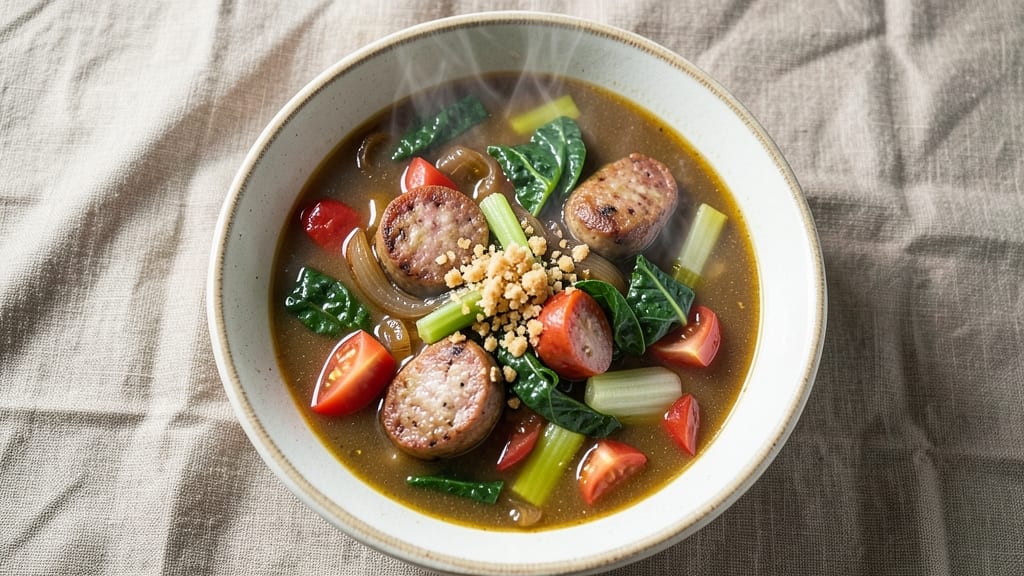
Betty Crocker’s minestrone soup brings the warmth of a classic Italian kitchen to your stovetop with its rich, vegetable-packed broth and hearty ingredients. This recipe delivers the comforting flavors you crave—tomato, basil, and oregano—while keeping preparation straightforward for a weeknight dinner.
The secret lies in layering flavors through sautéing vegetables and simmering them in broth until everything melds into a satisfying, one-pot meal.
What sets this minestrone apart is its balance of textures: tender beans, al dente pasta, and crisp vegetables all swimming in a savory broth. The recipe includes optional ground beef or Italian sausage for added depth, but it works beautifully as a vegetarian version too.
Simmering time transforms simple ingredients into a deeply flavorful soup that feels like a hug in a bowl.
The result is a soup that’s hearty enough to stand as a main dish but light enough to leave you satisfied without heaviness. Each spoonful delivers layers of tomato sweetness, herby freshness, and the comforting warmth of slow-cooked vegetables.
Perfect for chilly evenings or meal prep, this minestrone brings restaurant-quality comfort to your kitchen.
Serve with crusty bread to soak up every last drop of that flavorful broth, or pair it with a simple green salad for a balanced meal.
The recipe scales easily for a crowd, making it ideal for gatherings or leftovers that taste just as good the next day. Let’s get cooking!
Ingredients for betty crocker minestrone soup
Fifteen quality ingredients transform into a restaurant-worthy minestrone with layers of tomato, herb, and vegetable richness.
| Ingredient | Amount | Notes |
|---|---|---|
| Extra-Virgin Olive Oil 🫒 | ½ cup | For sautéing vegetables, high quality preferred |
| Yellow Onion 🧅 | 1 ½ cups | Diced, medium dice preferred |
| Carrots 🥕 | 2 cups | Peeled, sliced into 1/4-inch rounds |
| Celery Stalks 🥬 | 2 cups | Diced, including leaves if available |
| Garlic Cloves 🧄 | 4 cloves | Minced, fresh preferred |
| Canned Diced Tomatoes 🍅 | 2 cups | San Marzano preferred, undrained |
| Vegetable Broth 💧 | 4 cups | Low-sodium preferred, homemade or high-quality |
| Canned Cannellini Beans 🌱 | 1 cup | Drained and rinsed, or sub white beans |
| Small Shell Pasta 🍝 | 1 ½ cups | Ditalini or small shells preferred |
| Fresh Basil Leaves 🌿 | ¼ cup | Chopped, stems removed |
| Dried Oregano 🍃 | 1 tsp | Italian preferred, freshly ground |
| Salt 🧂 | 1 ½ tsp | Diamond Crystal kosher preferred |
| Black Pepper 🌶️ | ½ tsp | Freshly ground preferred |
| Ground Beef or Italian Sausage 🥩 | ½ lb | Optional, 85% lean preferred |
| Parmesan Cheese 🧀 | ¼ cup | Freshly grated, for serving |
The vegetable base demands freshness. Whole Foods or local farmers markets offer the best quality carrots and celery—look for crisp, vibrant stalks with no soft spots. The San Marzano canned tomatoes are non-negotiable for authentic sweetness; Trader Joe's carries them at reasonable prices. For the broth, homemade is ideal, but Pacific Foods low-sodium versions work perfectly. The cannellini beans should be plump and firm—avoid dented cans. Fresh basil from the grocery store's refrigerated section (not the sad plastic containers) adds that signature Italian brightness. Store your dried oregano in a dark, airtight container to preserve its potency for up to a year.
No fresh basil? Dried basil at one-third the amount works in a pinch, though texture suffers. Substituting white beans for cannellini changes the flavor profile slightly but maintains heartiness. The optional meat can be omitted entirely for a vegetarian version, or chicken thighs provide a leaner alternative. For the pasta, ditalini or small shells hold up best during simmering, though any small shape works. The Parmesan should be freshly grated—pre-shredded contains anti-caking agents that make it taste gritty. Need to stretch the recipe? Add zucchini or green beans—they soften beautifully during simmering.
This soup tastes even better the next day as flavors meld. Store leftovers in airtight containers for up to 5 days in the refrigerator or 3 months frozen. For freezing, portion into single-serving containers to maintain texture. The broth can be made ahead and frozen separately—simply reheat with fresh pasta added at the end. The optional meat should be cooked separately and added back during the final 5 minutes of reheating to prevent overcooking. Always taste before serving—adjust salt and pepper as needed, as flavors intensify upon reheating.
Why You'll Love This Recipe
- I’ll be real: I keep this recipe on rotation because it’s ridiculously budget-friendly. A single onion, a few carrots, and a stalk of celery go a long way when you’re building flavor from the ground up. Plus, the leftovers taste even better the next day—proof that simple ingredients, when treated right, can outshine anything fancy.
- No-Chop Shortcuts: I swear by the Betty Crocker shortcuts here—just dice those carrots and celery into rough chunks (no fancy knife work needed) and let the slow simmer do the magic. The onions and garlic caramelize right in the olive oil while you stir, and suddenly you’ve got that deep, savory base without standing at the counter for 20 minutes.
- Garlic-Glazed Magic: That moment when the garlic cloves hit the pan and start sizzling in the olive oil? Chef’s kiss. The recipe lets them soften just enough to sweeten the whole pot—no burning, no bitterness—just pure, warm garlic flavor that weaves through every spoonful. Honestly, it’s the little things like this that make me reach for this recipe again and again.
- Lunchbox Hero: Between us, this soup is my secret weapon for meal prep. The veggie base holds up perfectly for days, and I’ll often toss in extra beans or pasta when reheating to stretch it further. Pack it cold in a thermos for work or warm it up for a lazy dinner—it’s the one dish that never lets me down, even on my worst days.
Step-by-step instructions for hearty vegetable-packed minestrone soup
This method delivers restaurant-quality minestrone with rich flavors and perfectly tender vegetables every time.
Sauté the Vegetable Base
Heat the 0.5 cup extra-virgin olive oil in a large Dutch oven over medium heat. Add the 1.5 cups diced yellow onion, 2 cups sliced carrots, and 2 cups diced celery stalks, stirring occasionally for 8-10 minutes until the vegetables soften and begin to caramelize. You'll see the edges turn golden—that's when you know they're developing sweetness.
Add the 4 minced garlic cloves and cook for 30 seconds until fragrant. This foundational step builds flavor depth that carries through the entire soup. If the vegetables stick, add a splash of vegetable broth to deglaze and keep everything moist. I like to press down gently on the vegetables with a wooden spoon during the first few minutes—this prevents them from burning while they release their moisture.
Develop the Flavor Foundation
Pour in the 2 cups canned diced tomatoes (including juices) and 4 cups vegetable broth, stirring to combine. Bring the mixture to a gentle boil, then reduce heat to medium-low and let it simmer uncovered for 15 minutes. This simmering time allows the vegetables to fully tenderize and the flavors to meld together.
During this time, add the 1 tsp dried oregano, 1.5 tsp salt, and 0.5 tsp black pepper, stirring well to distribute. Taste the broth—it should be seasoned but not salty. If you're using the optional 0.5 lb ground beef or Italian sausage, brown it in a separate skillet first, then crumble it into the soup now. The meat will absorb the rich tomato-broth flavors beautifully.
Add Pasta and Beans
Stir in the 1 cup drained cannellini beans and 1.5 cups small shell pasta. The pasta will cook directly in the soup, absorbing all those wonderful flavors. Increase heat to medium-high and bring the soup back to a boil, then reduce heat to medium-low again. Simmer for 10-12 minutes, stirring occasionally, until the pasta is al dente and the beans are heated through.
Here's the thing—minestrone should have texture, not be a puree. The beans and pasta provide that satisfying bite. If the soup looks too thick, add ½ cup more vegetable broth to reach your desired consistency. The soup will thicken slightly as it cools, so aim for a slightly looser texture now. Taste and adjust seasoning if needed—this is where the soup comes together.
Finish with Fresh Herbs and Rest
Remove the soup from heat and stir in the 0.25 cup chopped fresh basil leaves. Let the soup sit off the heat for 5 minutes to allow the flavors to meld. This resting period is crucial—it lets the basil infuse without cooking off its bright, fresh flavor. I like to taste the soup at this stage to ensure all elements are balanced.
Ladle the soup into bowls and top each serving with 1 tablespoon freshly grated parmesan cheese. The parmesan adds a final layer of umami richness that ties everything together. Serve immediately while the pasta is still slightly firm and the flavors are at their peak. This soup tastes even better the next day as the flavors continue to develop, but it's best enjoyed fresh from the pot.
Pro Tips For Making Betty Crocker Minestrone Soup
- Sweat the Veggies: DESCRIPTION: Betty Crocker’s recipe might say “sauté,” but sweat your onions, carrots, and celery first—low and slow for 8–10 minutes with a splash of water. I learned this the hard way: rushing this step turns your soup into a mushy, one-note mess. The goal is soft but still recognizable texture, not a pulp.
- Dice Carrots Small: DESCRIPTION: Skip the thick chunks—cut those carrots into ¼-inch dice. They’ll cook faster and blend into the broth evenly, giving you that classic minestrone consistency. I used to leave them in big hunks, and they’d either stay crunchy or turn to mush. Small pieces = happy soup.
- Bloom the Garlic: DESCRIPTION: Add the garlic after the onions are translucent, then let it sit in the oil for 30 seconds before stirring. This prevents burning and deepens the flavor—no more bitter aftertaste. (Yes, even if you’re impatient like me.)
- Simmer, Don’t Boil: DESCRIPTION: Once everything’s in the pot, keep the heat at a gentle simmer (tiny bubbles, not a rolling boil). Boiling toughens the beans and breaks up the broth’s texture. I used to ignore this, and my soup would turn watery. Low and slow keeps it rich.
Dietary considerations for betty crocker minestrone soup
Vegetarian Adaptations
Skip the optional meat entirely and boost umami with ½ cup mushrooms (cremini or shiitake) sautéed with the onions. I also add 1 tbsp soy sauce when simmering the broth for deeper flavor without meat.
For extra protein, stir in ½ cup cooked lentils or 1 cup chopped kale during the final 5 minutes of cooking. 🌱
Gluten-Free Options
Replace the small shell pasta with gluten-free ditalini or chickpea pasta—both hold up well in soups. I recommend Banza chickpea pasta for its nutty flavor and high protein.
Check your vegetable broth label to ensure it's certified gluten-free, as some contain wheat-based additives. The rest of the recipe remains unchanged.
Low-Sodium Adjustments
Use homemade vegetable broth or a low-sodium brand like Pacific Foods to cut excess salt. Reduce the 1.5 tsp salt to ½ tsp and add ½ tsp garlic powder and ½ tsp onion powder for depth.
Finish each bowl with a squeeze of lemon juice—just ½ tsp per serving—to brighten flavors naturally.
Dairy-Free Substitutes
Omit the parmesan or use nutritional yeast (2 tbsp) for a cheesy flavor without dairy. For richness, stir in 2 tbsp tahini or 1 tbsp olive oil per bowl before serving. The soup still delivers satisfying texture and heartiness without cheese. 🧀
Allergen-Friendly Swaps
For nut allergies, avoid the tahini and stick with olive oil. If celery is an issue, substitute with 2 cups zucchini or 1 cup chopped bell peppers.
Always check canned beans for cross-contamination warnings—look for brands labeled "processed in a nut-free facility." The recipe remains flexible while keeping the core flavors intact.
Nutrition facts
Frequently asked questions
Can I make this minestrone soup without meat?
The recipe works beautifully as a vegetarian version! Simply omit the optional ground beef or Italian sausage and boost umami with ½ cup mushrooms sautéed with the onions. Add 1 tbsp soy sauce to the broth for deeper flavor. For extra protein, stir in ½ cup cooked lentils or 1 cup chopped kale during the final 5 minutes of cooking.
How do I adjust the recipe for gluten-free diets?
Replace the small shell pasta with gluten-free ditalini or chickpea pasta like Banza, which holds up well in soups. Always check your vegetable broth label for gluten-free certification, as some contain wheat-based additives. The rest of the recipe remains the same, and the flavor stays rich and satisfying.
Can I prepare this soup ahead of time?
This minestrone tastes even better the next day as flavors meld. Store leftovers in airtight containers for up to 5 days in the fridge or 3 months frozen. For freezing, portion into single-serving containers to maintain texture. Reheat gently on the stove, adding fresh pasta at the end if needed. The broth can be made ahead and frozen separately too.
What can I do if my soup is too thick?
If your minestrone is too thick, simply add ½ cup more vegetable broth and stir well. The soup will thicken slightly as it cools, so aim for a slightly looser texture when hot. For extra creaminess, stir in 1 tablespoon olive oil or a splash of heavy cream (for non-vegetarian versions) before serving.
Which vegetables can I substitute if I don't have carrots or celery?
You can substitute with 2 cups zucchini or 1 cup chopped bell peppers for celery, and 1 cup diced sweet potatoes or 1 cup butternut squash for carrots. For extra heartiness, add 1 cup chopped kale or ½ cup frozen peas during the final 5 minutes of cooking. Just adjust cooking times if using denser vegetables like sweet potatoes.