Soups & Stews
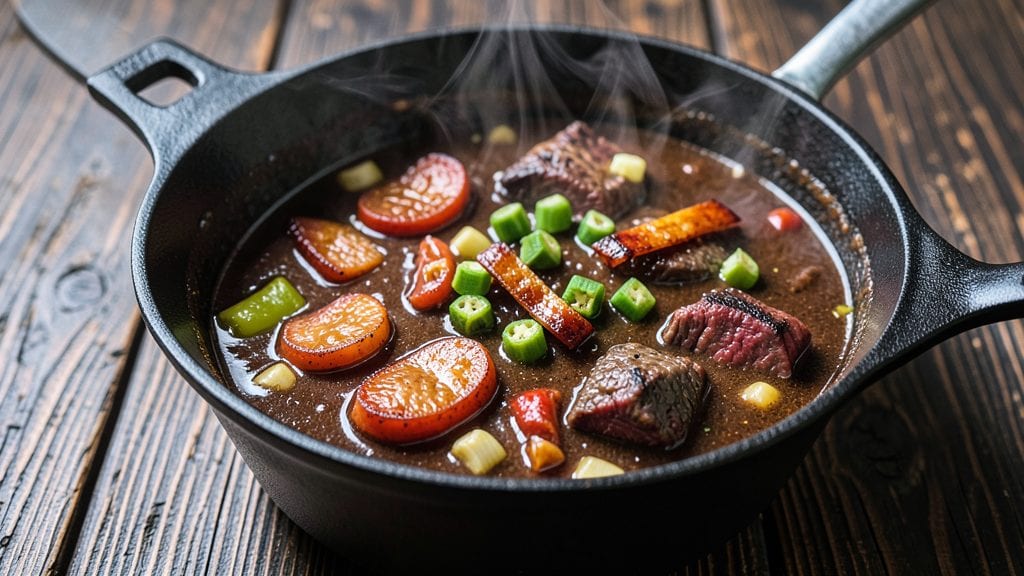
This beef gumbo recipe delivers the rich, smoky depth of a Louisiana classic with a deep-roasted roux and okra-thickened broth that builds flavor layer by layer. The key lies in patience—cooking the roux until it reaches a dark mahogany color unlocks the foundation for all that follows.
I’ve perfected this version over years of trial and error, ensuring the sausage and beef develop that signature smoky, slightly sweet complexity that defines gumbo.
The process begins with a smoky sausage base, where andouille or kielbasa renders its fat into the roux, infusing the oil with deep, savory notes before the vegetables arrive. Celery, bell peppers, and onions form the holy trinity of gumbo flavors, sautéed until they soften but retain their structure.
Okra, whether fresh or powdered, thickens the broth naturally as it simmers, creating a velvety texture without the need for flour or cornstarch.
By the time the beef is added, the broth should be deep, aromatic, and rich, with layers of spice from cayenne, thyme, and bay leaf. The final result is a hearty stew with tender beef, smoky sausage, and vegetables swimming in a thick, flavorful broth that coats every spoonful.
This is gumbo as it should be—bold, comforting, and unforgettable—perfect for feeding a crowd or savoring in smaller portions.
For those adapting the recipe, swap beef for shrimp or chicken, or use vegetable broth for a lighter version. The roux technique remains the same, ensuring the dish stays true to its roots while accommodating dietary needs. Let’s get cooking—this gumbo is worth the effort.
Ingredients for beef gumbo
Sixteen essential ingredients transform into a rich, smoky gumbo with deep roux foundation.
| Ingredient | Amount | Notes |
|---|---|---|
| Andouille Sausage 🌭 | 1 ½ lb | Smoked variety preferred |
| Vegetable Oil 🫒 | ½ cup | High smoke point required |
| Yellow Onion 🧅 | 1 whole | Medium-sized, diced |
| Green Bell Pepper 🌶️ | 1 whole | Medium-sized, diced |
| Celery Stalks 🥬 | 3 whole | Medium-sized, chopped |
| Okra 🌱 | 1 lb | Fresh or frozen, sliced |
| Beef Chuck Roast 🥩 | 2 lb | Cut into 1-inch cubes |
| Dried Thyme 🌿 | 1 tsp | Or 1 tbsp fresh thyme leaves |
| Bay Leaves 🍃 | 2 whole | Fresh preferred |
| Cayenne Pepper 🔥 | ½ tsp | Adjust for heat preference |
| Garlic Cloves 🧄 | 4 cloves | Minced for depth |
| Chicken Broth 💧 | 4 cups | Low-sodium preferred |
| Salt 🧂 | 1 ½ tsp | Diamond Crystal preferred |
| Black Pepper 🌶️ | ½ tsp | Freshly ground |
| Fresh Parsley 🌿 | ¼ cup | Chopped for garnish |
The andouille sausage is the flavor anchor—Zatarain's or Johnsonville brands deliver consistent quality. For the roux, vegetable oil with a high smoke point is non-negotiable; Crisco works in a pinch but lacks the depth of fresh oil. The holy trinity (onion, bell pepper, celery) should be finely diced—uniform size ensures even cooking. Fresh okra is ideal, but frozen works when fresh isn't available. Costco often carries pre-sliced okra in the frozen section, saving prep time. For the beef, chuck roast with good marbling ensures tenderness after long simmering.
No andouille? Kielbasa or smoked sausage works, though flavor will differ slightly. Fresh thyme is preferable but dried works at one-third the amount. The chicken broth can be swapped for beef broth for deeper flavor, though it may darken the gumbo. Powdered okra thickens similarly to fresh—use half the weight of fresh okra. For heat adjustments, reduce cayenne to 1/4 tsp if sensitive to spice. The garlic can be pre-minced to save time, though fresh mincing adds more flavor. Vegetarian option: swap beef for hearty mushrooms and use vegetable broth.
This gumbo improves with time—flavors meld best after 24 hours. Store in an airtight container in the fridge for 4-5 days or freeze for up to 3 months. For reheating, simmer gently on the stove with a splash of broth to restore thickness. The roux base can be made ahead and refrigerated for up to 3 days, though it's best used immediately for peak flavor. Garnish with fresh parsley just before serving to maintain vibrant color.
Why You'll Love This Recipe
- One-Pot Magic: The andouille and celery-butter base cooks down into a rich roux so fast, you’ll forget to stress. Slice the veggies while the oil heats—no fancy prep, just a deep pot and 20 minutes of hands-off simmering.
- Smoky Depth Bomb: That first bite of andouille sausage melting into the gumbo? Pure flavor payoff. The bell pepper adds a bright kick while the onions caramelize into something almost sweet—like a hug in a bowl.
- Crowd-Pleaser Any Day: Game day? Family dinner? Leftovers for lunch? This gumbo handles it all. Double the batch, freeze half, and still have enough to serve guests without extra work.
- Budget-Friendly Feast: A pound of andouille and a few fresh veggies stretch into four hearty servings. No fancy cuts, no wasted ingredients—just honest, satisfying flavor that won’t break the bank.
Step-by-step instructions for beef gumbo with okra and andouille
Master this roux-based gumbo technique for rich, velvety texture and deep smoky flavors.
Build the Dark Roux Foundation
Heat the 0.5 cup vegetable oil in a heavy Dutch oven over medium heat. Add the 1 whole yellow onion, 1 whole green bell pepper, and 3 whole celery stalks (chopped) and cook for 8-10 minutes until softened. Remove the vegetables and set aside.
Return the Dutch oven to the stove and reduce heat to medium-low. Slowly whisk in 1 tablespoon of flour at a time, allowing each addition to fully incorporate before adding more. Stir constantly for 45-60 minutes until the roux reaches a deep mahogany color—this is your flavor base. The roux should coat the back of a spoon and smell nutty, not burnt. If it darkens too quickly, reduce heat further; patience here prevents bitterness.
Develop the Sausage and Okra Base
Add the 1.5 lb andouille sausage (sliced into rounds) to the dark roux and cook for 5 minutes until lightly browned. Stir in the 1 lb okra (sliced into rounds) and cook for 3 minutes to soften slightly. Add the 4 cloves garlic cloves (minced) and cook for 30 seconds until fragrant.
Return the reserved vegetables to the pot along with the 2 lb beef chuck roast (cut into 1-inch cubes). Sprinkle with 1 tsp dried thyme, 2 whole bay leaves, 0.5 tsp cayenne pepper, 1.5 tsp salt, and 0.5 tsp black pepper. Stir gently to coat everything in the roux.
Simmer the Gumbo Until Tender
Pour in the 4 cups chicken broth and bring to a gentle simmer. Cover and cook for 1.5 hours on low heat, stirring occasionally, until the beef is fork-tender. The gumbo should reduce slightly, developing a rich, thick consistency. If the liquid evaporates too quickly, add ½ cup water to maintain moisture without diluting the flavor.
Here's the thing—this long simmering time is non-negotiable. It breaks down the connective tissue in the beef and develops the deep, complex flavors that define gumbo. The okra will thicken the broth naturally, creating that signature velvety texture without needing additional thickeners.
Finish and Garnish
Once the beef is tender, remove the bay leaves and discard. Taste and adjust seasoning—you may need an additional ½ tsp salt or ¼ tsp black pepper depending on your broth. Stir in the 0.25 cup fresh parsley (chopped) just before serving to brighten the dish with freshness.
Let the gumbo rest for 10 minutes off the heat before serving. This resting period allows the flavors to meld and the okra to fully release its thickening properties. Serve immediately with hot rice and crusty bread to soak up every last bit of that smoky, roux-rich gumbo.
Pro Tips For Making Beef Gumbo
- Slice the Andouille Thin: That sausage’s got layers—cut it into ¼-inch rounds so it renders fat and flavor fast. I learned this the hard way after staring at a pot of gumbo where the sausage was still holding its shape after 45 minutes. Thin slices = faster cooking = deeper taste.
- Sweat, Don’t Burn, the Trinity: Onions, peppers, celery—cook them low and slow (medium heat) until just soft, not browned. After burning three batches, I finally figured out that rushing this step turns your base bitter. A splash of water or splash of broth helps steam them down without scorching.
- Skip the Crowding: Toss all your chopped veggies into the pot at once? Bad move. Work in batches so they sizzle and release moisture properly. I was skeptical until I tried it—now my gumbo has that rich, caramelized depth instead of a sad, watery base.
- Deglaze with Broth, Not Water: After browning the sausage, scrape up those browned bits with a spoon and hit them with a cup of beef broth (not water). That extra umami makes a real difference—your future self will notice the difference in flavor. (Yes, even if you’re impatient like me.)
Storing and reheating your leftovers
Refrigerator Storage
Transfer your gumbo to an airtight container—I prefer glass Pyrex for even cooling—and let it sit at room temperature for no more than 2 hours before refrigerating. Store at 40°F or below for up to 4-5 days, though the flavors deepen overnight as spices meld.
The roux-thickened broth actually improves in texture, becoming even more velvety. 💫
Freezer Preparation
For long-term storage, cool the gumbo completely before transferring to freezer-safe containers or heavy-duty freezer bags. Leave 1-inch headspace to prevent expansion cracks, and label with the date.
This gumbo freezes beautifully for up to 3 months, though I recommend using it within 2 months for peak quality. Portion into single servings for easy reheating.
Stovetop Reheating
My preferred method is stovetop reheating—it restores the gumbo’s rich texture perfectly. Transfer to a pot over medium-low heat, add ¼ cup water or broth, and simmer uncovered for 10-15 minutes, stirring occasionally.
Avoid boiling, which can break down the roux. Taste and adjust seasoning—gumbo often needs a pinch of salt or black pepper after reheating. 🔥
Microwave Shortcuts
For quick meals, microwave individual portions in microwave-safe bowls covered with a damp paper towel. Heat on 50% power for 3-4 minutes, stir, then continue in 30-second intervals until reaching 165°F.
Add a splash of broth if the gumbo thickens too much. This method works best for single servings and preserves some of the roux’s depth.
Reviving Thickened Gumbo
If your gumbo thickens too much after reheating, stir in 1-2 tablespoons of warm broth or water to restore balance. The okra’s natural thickening power means gumbo can sometimes become gluey when cold—simmering gently with extra liquid fixes this.
For extra richness, stir in 1 tablespoon of butter or a splash of cream at the end. 💡
Serving After Storage
Always garnish with fresh parsley and serve with hot rice or crusty bread to soak up the broth. The gumbo’s flavors are most vibrant when served fresh from the fridge or freezer, so don’t skip the final seasoning adjustment.
A squeeze of lemon or a sprinkle of hot sauce can brighten flavors if needed. Enjoy the leftovers—they’re just as delicious as the original! 🍽️
Nutrition facts
Frequently asked questions about beef gumbo
Why does my roux turn burnt instead of mahogany?
Roux burns when heat is too high or stirring stops. Keep heat at medium-low and stir constantly—every 1-2 minutes—until it reaches a deep mahogany color. If it darkens too quickly, reduce heat further. Patience is key: a burnt roux adds bitterness that ruins the dish.
Can I substitute okra with another thickener?
Yes, but texture changes. For a similar result, use 1 tablespoon cornstarch or flour mixed with 1 tablespoon cold water per cup of gumbo—stir in during the last 10 minutes of simmering. File powder (from sassafras) also works traditionally, but okra provides natural thickening without altering flavor.
How do I make this gumbo spicier?
Double the cayenne pepper to 1 tsp or add ½ teaspoon crushed red pepper flakes during the last 5 minutes of cooking. For heat without dryness, stir in 1 tablespoon hot sauce after reheating. Pro tip: Toast whole spices (like cayenne seeds) in the roux for deeper flavor.
What’s the best way to reheat gumbo without ruining the roux?
Use low heat on the stovetop with ¼ cup broth to prevent thickening. Never microwave uncovered—it dries out the roux. For extra richness, stir in 1 tablespoon butter during reheating. If too thick, add 1-2 tablespoons water while simmering.
Can I make gumbo ahead for a party?
Gumbo tastes even better the next day. Cook it 24 hours ahead, then refrigerate in an airtight container. Reheat gently with broth, adjust seasoning, and garnish with fresh parsley before serving. For parties, portion into slow cookers to keep warm—this stew only gets better with time.