Side Dishes
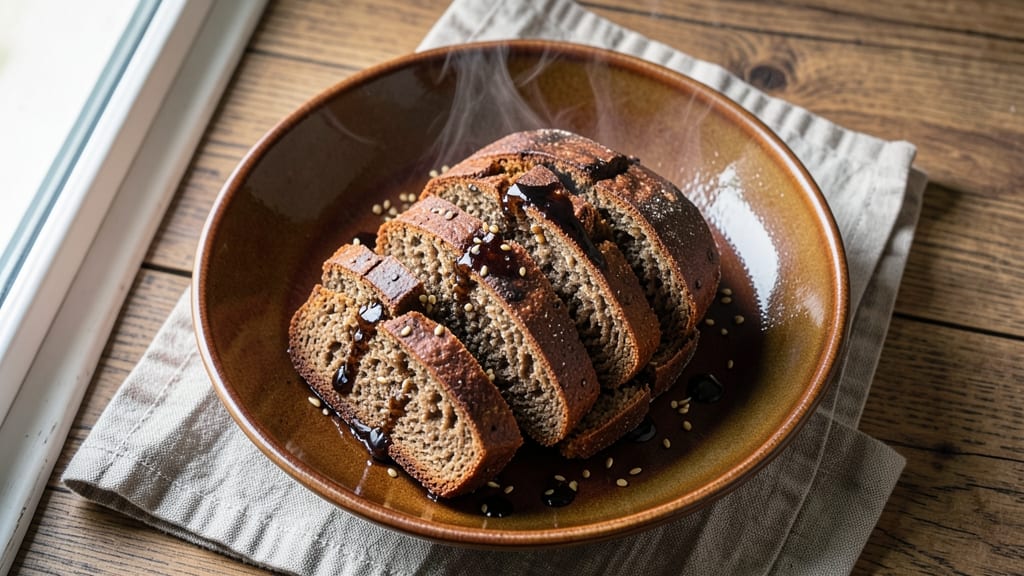
This authentic German pumpernickel bread recipe delivers the deep molasses flavor and rustic crust that makes it a staple in German households for centuries. The secret lies in its long fermentation—up to 72 hours—which develops that signature dark color and rich, slightly sweet taste.
I’ve perfected this method over years, balancing traditional techniques with modern convenience for home bakers.
The result is a dense, moist loaf with a crispy exterior and a crumb so tender it practically melts in your mouth. Unlike commercial versions, this recipe uses whole grain rye flour and dark molasses for authenticity, while remaining vegan-friendly.
The slow fermentation process isn’t just about color—it builds complex flavors that store-bought bread simply can’t match.
Baking pumpernickel requires patience, but the reward is a loaf that stays fresh for weeks when stored properly. The rustic crust forms naturally as it bakes, while the interior remains soft and slightly chewy—a perfect balance of textures.
This bread pairs beautifully with hearty German dishes or simply toasted with butter for breakfast.
Whether you’re making it for a traditional German meal or just love artisanal bread, this recipe delivers restaurant-quality results at home. The key steps—proper hydration, long fermentation, and precise baking—ensure every slice tastes like it came from a German bakery. Let’s get started on creating your own authentic loaf.
Ingredients for authentic german pumpernickel bread
Six key ingredients transform into authentic German pumpernickel with signature dark color and rich flavor.
| Ingredient | Amount | Notes |
|---|---|---|
| Whole Grain Rye Flour 🌾 | 4 cups | Dark rye for authentic flavor |
| Dark Molasses 🍯 | ½ cup | Unsulphured for rich sweetness |
| Active Dry Yeast 🍞 | ½ tsp | Instant yeast works too |
| Warm Water 💧 | 1 ½ cups | 105°F for optimal yeast activation |
| Vegetable Oil 🫒 | ½ cup | Light olive oil preferred |
| White Vinegar 🍶 | 1 tbsp | For proper acidity balance |
| Salt 🧂 | 1 ½ tsp | Diamond Crystal preferred |
| Flaxseed Meal 🌱 | 1 tbsp | Mixed with 3 tbsp water for egg replacement |
| Cornmeal 🌽 | ½ cup | For dusting baking sheet |
| Sesame Seeds 🌻 | 1 tbsp | Optional for decorative crust |
| Blackstrap Molasses 🍯 | 1 tbsp | For brushing final crust |
The whole grain rye flour is non-negotiable for authentic flavor—King Arthur or Bob's Red Mill brands deliver consistent results. Dark molasses should be unsulphured; Gund is the gold standard for German bakeries. Fermentation requires patience, so stock up on Diamond Crystal kosher salt for precise seasoning. The flaxseed egg replacement binds perfectly while maintaining vegan integrity. For yeast, Saf-Instant works best without proofing time, though traditional active dry yeast requires 5 minutes in warm water. Store all dry ingredients in airtight containers to preserve freshness.
No dark molasses? Blackstrap molasses mixed with equal parts brown sugar approximates the depth, though flavor won't be identical. Substitute apple cider vinegar for white vinegar if needed, though it alters the acid profile slightly. For the flax egg, chia seeds work at the same ratio but yield a slightly firmer texture. The cornmeal can be omitted if unavailable, though it prevents sticking during baking. Sesame seeds are optional but add that classic German bakery touch—use white or black for variation. All ingredients should be room temperature before mixing to ensure proper hydration.
This dough requires 72 hours of cold fermentation for optimal flavor development. Store the dough in a proofing box or refrigerator between stages, covered with damp towel to prevent drying. The final loaf keeps for up to 2 weeks at room temperature wrapped in beeswax-free parchment, or 3 months frozen in airtight containers. For reheating, wrap slices in foil and warm at 350°F for 5 minutes—never microwave, as it destroys the crust's integrity. The molasses brushing should be done just before baking to maintain freshness.
Why You'll Love This Recipe
- No-Knead Magic: I swear by this dough—just mix, let it rise, and bake. The molasses and rye do all the heavy lifting while you sip coffee. (Yes, even on a Tuesday night.)
- Deep, Dark Richness: That first bite? Molasses and rye create a slow-sweet, earthy flavor that lingers. It’s not just bread—it’s a flavor experience, like a warm hug for your taste buds.
- Weeknight Workhorse: Slice it for breakfast toast, pack it for lunch, or serve it with dinner—this bread handles it all. Honestly, I’ve even used it as a base for open-faced sandwiches when I’m lazy.
- Budget-Friendly Staple: Whole grain rye and molasses stretch my grocery budget without sacrificing quality. A single loaf lasts me a week, and the leftovers? Perfect for croutons or breadcrumbs.
Step-by-step instructions for authentic German pumpernickel bread
Traditional German technique ensures deep molasses flavor and a signature dense crumb.
Prepare the Flaxseed Egg Substitute
In a small bowl, combine the 1 tablespoon flaxseed meal with 3 tablespoons warm water (about 105°F). Stir thoroughly and let sit for 10 minutes until it thickens into a gel-like consistency resembling an egg. This flaxseed mixture will replace traditional eggs while maintaining moisture and structure in the dense rye dough.
Test the readiness by inserting a clean finger into the mixture—it should hold its shape when lifted. If it remains too runny after 10 minutes, add an additional ½ teaspoon flaxseed meal and let it thicken for another 5 minutes. This step is crucial for achieving the bread's signature chewiness without compromising texture.
Mix the Dough with Molasses and Yeast
In a large mixing bowl, whisk together the 4 cups whole grain rye flour, 1.5 teaspoons salt, and 0.5 teaspoon active dry yeast. Create a well in the center and pour in the 0.5 cup vegetable oil, 1 tablespoon white vinegar, and the thickened flaxseed mixture. Gradually add the 1.5 cups warm water while stirring with a wooden spoon until a shaggy dough forms.
Transfer the dough to a stand mixer fitted with the dough hook attachment. Knead on low speed for 3 minutes until the dough begins to pull away from the sides of the bowl. Add the 0.5 cup dark molasses and continue kneading for an additional 5 minutes until the dough is smooth and elastic. The dough should be slightly sticky but not wet, indicating proper hydration for the dense crumb structure.
Ferment the Dough for Deep Flavor Development
Lightly oil a large mixing bowl and transfer the dough to it. Cover with a damp kitchen towel and let ferment in a warm place (75-80°F) for 4-6 hours, or until the dough has nearly doubled in size. During fermentation, the yeast will activate, breaking down the complex rye flour and developing the bread's signature tangy sweetness.
Check for readiness by performing the "poke test"—press a finger gently into the dough. If the indentation remains and doesn't spring back immediately, the dough is ready. If the dough hasn't risen sufficiently after 6 hours, continue fermenting for another 1-2 hours. Over-fermenting can lead to a sour flavor, while under-fermenting results in a dense, compact loaf without proper rise.
Shape and Proof the Dough
Turn the fermented dough onto a lightly floured surface and gently shape it into a 9x5-inch loaf pan. Press the dough firmly into the corners to eliminate air pockets, which is essential for achieving the bread's characteristic dense texture. Brush the top of the dough with 1 tablespoon blackstrap molasses and sprinkle evenly with 1 tablespoon sesame seeds for a decorative crust.
Cover the loaf pan with a damp towel and let proof at room temperature for 30-45 minutes, or until the dough has risen 1-2 inches above the rim of the pan. The molasses brushing will create a subtle sheen and enhance the bread's caramelized crust during baking. Avoid over-proofing, as this can cause the loaf to collapse or develop an overly sour flavor.
Bake for Maximum Crust Development
Preheat your oven to 375°F and place a baking sheet on the lower rack to catch any potential drips. Dust a baking sheet with 0.5 cup cornmeal and carefully transfer the loaf pan to it. Bake for 50-55 minutes, rotating the pan halfway through for even browning, until the top is deep brown and the internal temperature reaches 200°F when measured with an instant-read thermometer.
The bread should have a rustic, cracked crust with a glossy sheen from the blackstrap molasses. If the top browns too quickly, tent the loaf with aluminum foil during the final 10 minutes of baking. Remove from the oven and let cool in the pan for 10 minutes before transferring to a wire rack. This cooling period allows the internal structure to set, preventing a gummy crumb.
Pro Tips For Making Authentic German Pumpernickel Bread
- Bloom the Yeast First: Skip mixing yeast directly into the wet ingredients—it’s too acidic for it. Instead, dissolve it in warm water (about 110°F/43°C) with a pinch of sugar for 5-10 minutes until frothy. This guarantees it’s active before hitting the molasses-heavy dough, which can kill it if you’re not careful.
- Soak the Molasses: Dark molasses is thick and stubborn. Thin it with an equal part warm water before adding to the dough—this prevents clumps and ensures even distribution. I learned this the hard way when my first batch had sticky pockets of molasses that never dissolved.
- Knead Until Silky: Pumpernickel dough is dense and sticky, but it needs to be smooth, not just "worked." Use a stand mixer with a dough hook for 8-10 minutes until it pulls away from the bowl and feels like wet modeling clay. Hand-kneading works too, but your arms will hate you—do it on a floured surface, and wipe your hands often.
- Steam the Loaf: The oven’s dry heat will dry out the crust before the center bakes. Place a metal tray on the lower rack, fill it with boiling water, and bake the loaf covered with foil for the first 30 minutes. This mimics traditional German baking and keeps the crumb moist. (Yes, even if you’re impatient like me.)
Perfect pairings for these flavors
Classic German Spreads
Pair your pumpernickel with German mustard—I love Dijon-style or whole-grain mustard—for a tangy contrast that cuts through the bread's sweetness. Spread 2 tablespoons on each slice and top with thinly sliced smoked salmon or sharp cheddar cheese for a hearty open-faced sandwich.
The molasses depth in the bread balances the mustard's acidity beautifully. 🥓
Sweet Pairings
For breakfast or dessert, toast thick slices and spread with cream cheese mixed with 1 teaspoon honey and a pinch of cinnamon. Top with sliced apples or pears for a German-inspired Apfelstrudel vibe. The bread's density holds up perfectly to the fruit's juices. 🍏
Savory Meat Toppings
Create a German-style Reuben sandwich by layering corned beef, Swiss cheese, and Russian dressing between two slices of toasted pumpernickel. The bread's molasses flavor complements the tangy dressing and smoky meat. For a lighter option, try grilled chicken with horseradish cream and watercress. 🍖
Cheese Board Essentials
Use pumpernickel as a base for German-style cheese boards. Pair it with Aged Gouda, Limburger cheese, and smoked Gouda alongside pickled vegetables, dark rye crackers, and black forest ham. The bread's dense texture makes it ideal for holding cheese slices without falling apart. 🧀
Beverage Pairings
Complement the bread's deep molasses flavor with German beer—a Dunkel or Bock works perfectly. For non-alcoholic options, try chilled apple cider or ginger beer to refresh your palate. The effervescence of the drinks helps cleanse the richness of the molasses. 🍺
Breakfast Pairings
Toast the bread and top with scrambled eggs, crispy bacon, and a sprinkle of fresh chives for a German-inspired breakfast. The bread's density holds up well to the eggs' moisture, preventing sogginess. For a vegan option, use tofu scramble and avocado slices. 🍳
Nutrition facts
Frequently asked questions
Why does authentic German pumpernickel need such a long fermentation?
The 72-hour cold fermentation is key to developing the bread's signature deep color and complex molasses flavor. This slow process breaks down the rye flour's tough proteins and sugars, creating that signature tangy-sweet taste. Traditional German bakers used this method to ensure the bread stayed fresh longer in cool cellars.
Can I make this recipe without molasses?
While molasses is essential for authentic flavor, you can substitute 1/3 cup blackstrap molasses + 1/3 cup brown sugar for a similar depth. However, the flavor won't be identical—molasses provides both sweetness and that distinctive caramelized note. For a lighter version, try 1/2 cup honey, though it won't develop the same dark color.
How do I know when the dough is properly fermented?
Use the "poke test": press your finger gently into the dough. If the indentation stays and doesn't spring back immediately, it's ready. For cold fermentation, the dough should rise 25-50% after 24 hours and nearly double after 48-72 hours. Over-fermenting (beyond 72 hours) can make the bread too sour.
Why does my pumpernickel turn out too dense?
Over-kneading or under-fermenting are common culprits. The dough should be slightly sticky but not wet—add 1 tablespoon flour if needed. Also ensure proper yeast activation (75-80°F environment) and don't skip the cold fermentation. A 9x5-inch loaf pan helps create the right density—avoid free-form shapes for authentic texture.
How long does this bread keep fresh?
When stored properly in an airtight container at room temperature, it stays fresh for 2-3 weeks. For longer storage, freeze the loaf in slices wrapped in parchment paper for up to 3 months. Toast frozen slices directly from the freezer for 2-3 minutes at 375°F to restore freshness.